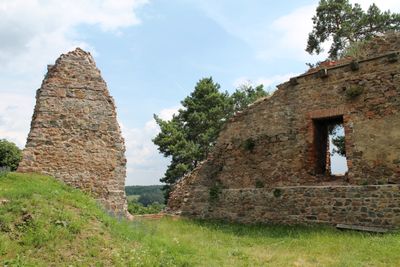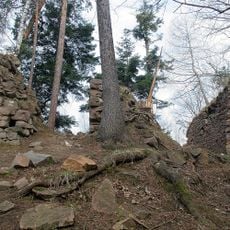
Žumberk Castle, Gothic castle ruin in Žumberk, Czech Republic.
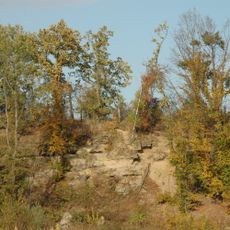
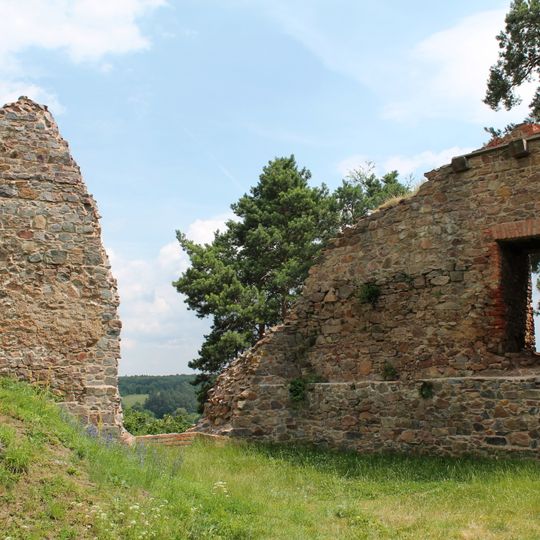
Žumberk Castle is a Gothic ruin perched on a hilltop featuring walls arranged in a pentagon shape. The structure is encircled by a deep moat with an adjacent service yard that reveals how the fortress once functioned.
The castle was probably built at the end of the 13th century; its first documented mention dates to 1318, when Pilunek of Žumberk was summoned before the land court for damages. In the 14th century it belonged to the lords of Boskovice, and from about 1590 Václav Záruba of Hustířany had it rebuilt in Renaissance style. In the early 18th century it was attached to the Nasavrky estate and began to decay.
The German name Sonnenberg, meaning "sun mountain", survived alongside the Czech Žumberk and recalls the castle's medieval origins. The Záruba family of Hustířany rebuilt the old castle in Renaissance style around 1590. Since 1964 the ruins have been protected as a cultural monument of the Czech Republic.
The ruins are open to visitors year-round without restrictions and offer views of the surrounding Iron Mountains from the hilltop vantage point. Expect uneven ground and partially exposed stone walls throughout the site.
The castle's German name Sonnenberg means "sun mountain"; it later shifted to Sommerberg, "summer mountain". Between 1760 and 1770 a physician lived in the already abandoned castle, and from 1926 to 1948 the Club of Czech Tourists owned it and stabilized the masonry.
The community of curious travelers
AroundUs brings together thousands of curated places, local tips, and hidden gems, enriched daily by 92,153 contributors worldwide.