Jewish cemetery in Holešov, Jewish burial ground in Holešov, Czech Republic
The Jewish cemetery in Holešov is a burial ground containing hundreds of gravestones in Renaissance and Baroque styles, decorated with Hebrew text and carved ornaments. The site also includes a ceremonial room with painted wooden panels and memorial stones.
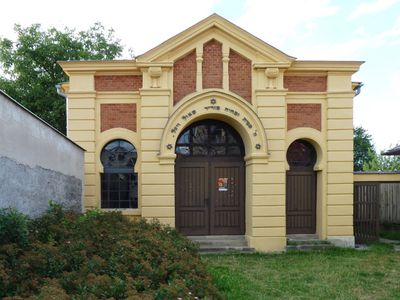
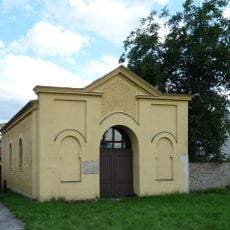
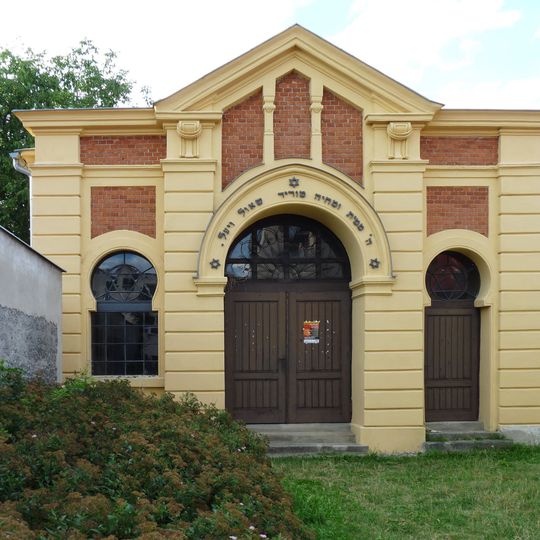
The cemetery was founded in the second half of the 15th century, when Holešov held one of the largest Jewish communities in Moravia. A flood in 1686 destroyed many of the oldest gravestones. The community ceased to exist in 1943; a plaque in the 1903 ceremonial hall lists 250 Holocaust victims from the area.
The cemetery takes its local name, the "rabbinical hill," from the western section where rabbis of Holešov are buried. The tomb of Rabbi Shabtai ben Me'ir ha-Kohen, known as the Shach, built in 1817 and repaired several times, draws hundreds of Orthodox Jews from around the world each year.
The entrance is on Hankeho Street, reached from the former Novosady suburb, roughly 300 m northwest of Dr. E. Beneše Square. The 1903 ceremonial hall stands right beside the gate, so the rabbinical section in the western part is best found from there. Visitors cover their heads and dress modestly.
The tomb of Rabbi Shabtai ben Me'ir ha-Kohen (1621–1663), known as the Shach, was built in 1817 and has been renewed several times. Hundreds of Orthodox Jews from around the world visit it each year. Two victims of the December 1918 Holešov pogrom, Hermann Grünbaum and Hugo Grätzer, are also buried in the cemetery.
The community of curious travelers
AroundUs brings together thousands of curated places, local tips, and hidden gems, enriched daily by 92,154 contributors worldwide.