Blana, Natural monument and protected area in Zahájí, Czech Republic.
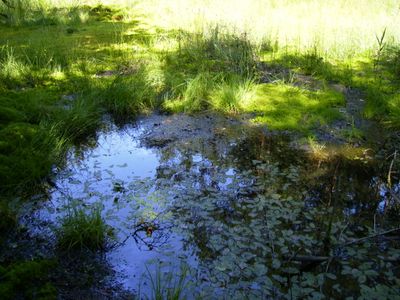
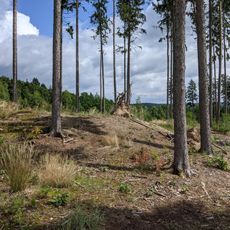
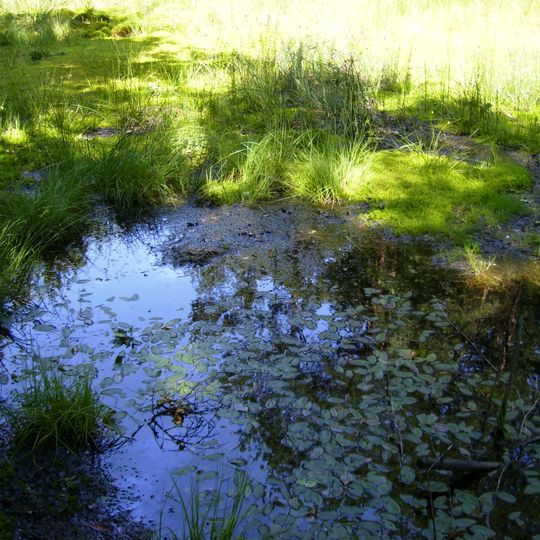
Blana is a 30.58 ha natural monument in the Řídká Blana forest complex between Blanský pond and an abandoned clay pit, 2 km northeast of Zliv. Its coniferous forest of Norway spruce and Scots pine holds over 1000 pools of varying size and depth, the largest reaching 14 ares, formed by flooding mine shafts and open pits.
Iron ore was mined here from 1852 despite a content of only 20–30%, and from 1881 ochre and refractory claystone were extracted; ochre clays were dug from shafts about 7 metres deep. Mining in the large quarry on the western edge of the Řídká Blana forest ended in 2005, and most of today's pools formed by flooding shaft mouths and open pits. Blana was declared a natural monument on 8 April 2011.
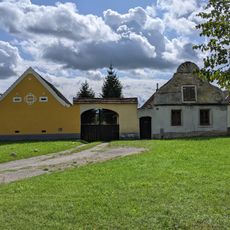
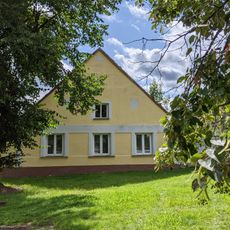
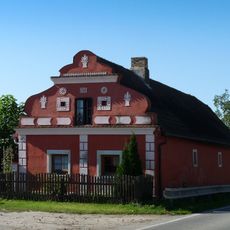
Ochre clay from the Řídká Blana shafts was long treated as waste, yet people in Zahájí used it to paint the outer walls of their houses into the 20th century. The pits left by mining filled with water and now hold over 1,000 pools, the largest about 14 ares.
Visitors can explore the site using designated paths while respecting conservation guidelines for the protected area. It is best to visit during drier periods when the trails are easier to navigate.
Most of the more than 1,000 pools were formed when the mouths of shafts and open-cast pits flooded after mining ended; the largest reach about 14 ares. The critically endangered Utricularia bremii, considered missing in the Czech lands from the late 1970s, was found here.
The community of curious travelers
AroundUs brings together thousands of curated places, local tips, and hidden gems, enriched daily by 93,740 contributors worldwide.