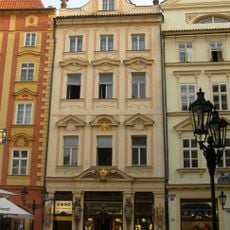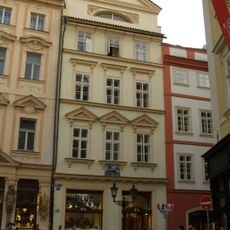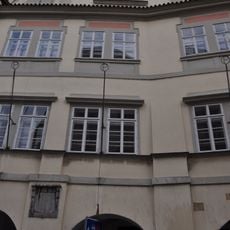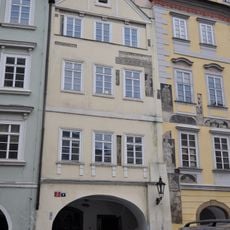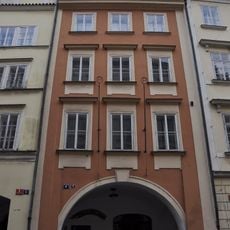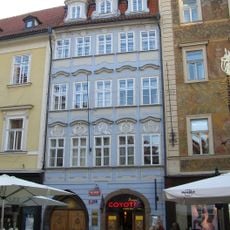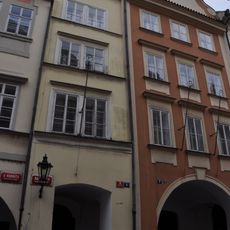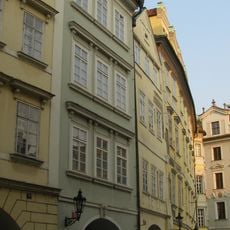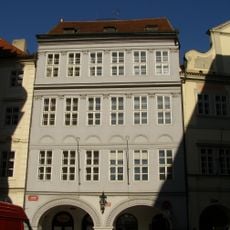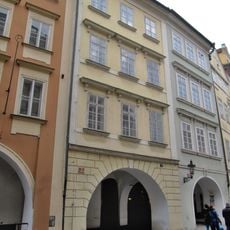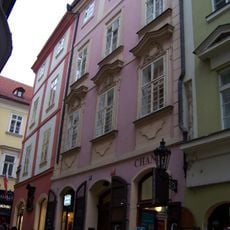
Dům U Zlatého rohu, Cultural monument in Old Town Square, Prague, Czech Republic.
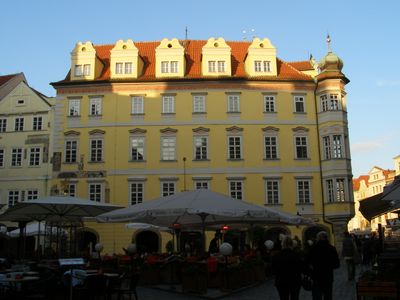
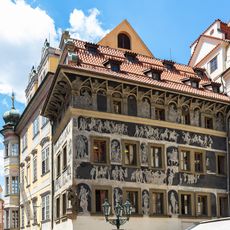
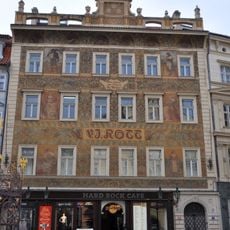
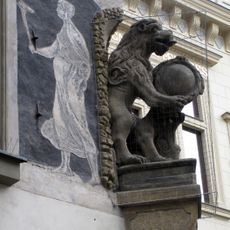
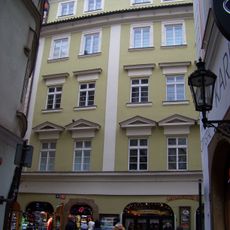
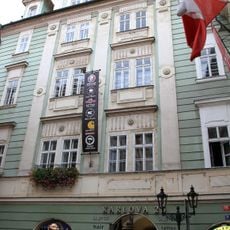
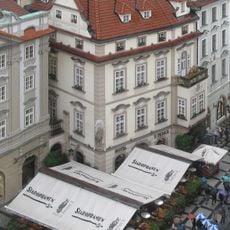
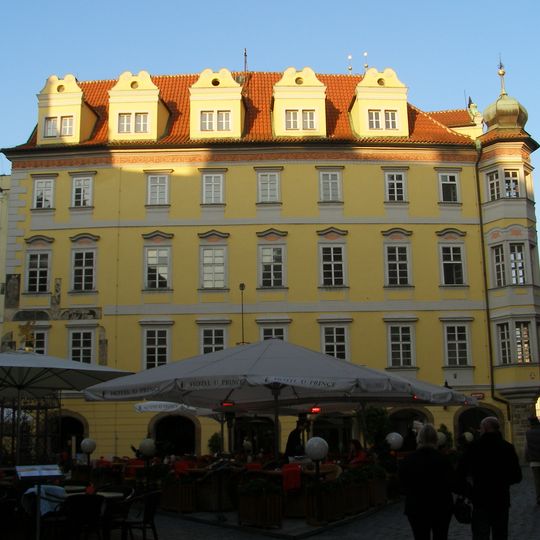
Dům U Zlatého rohu is a four-storey corner house at Malé náměstí 10, formed in 1623 by joining two medieval houses. Its late-Renaissance rebuild, attributed to Jan Dominik de Barifis, left a corner bay window and fragmentary ornamental and figurative sgraffito on the facade.
Two medieval houses stood on the site; the northern one is first recorded in 1404, when the townsman Henzlín Gundacker lived there, and only its cellar and parts of the walls survive. In 1623 the two houses were joined and rebuilt in late Renaissance style, with a corner bay window and sgraffito; Jan Dominik de Barifis is considered the builder. The facade was altered in Baroque style in the first half of the 18th century and in Neoclassical style in 1801.
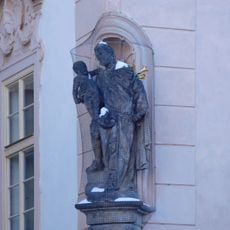
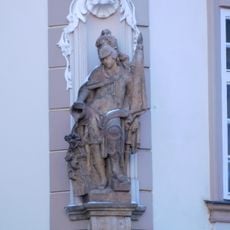
The house sign refers to the corner oriel, and a statue of St. Wenceslas, the house's patron, once stood in a niche on the first-floor corner; since the Janák reconstruction it has been kept in the Lapidarium of the National Museum, displayed in the Renaissance hall from 2010. Since 2015 the building has housed non-profits under the Prague City Hall, including the A. B. Svojsík Scout Institute, which lends its rooms free of charge to Czech Wikipedians; a café also operates here.
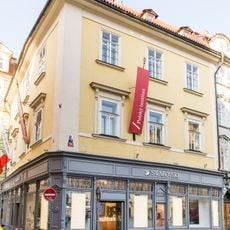
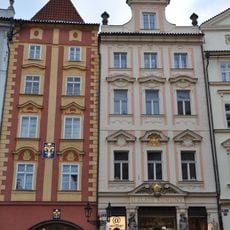
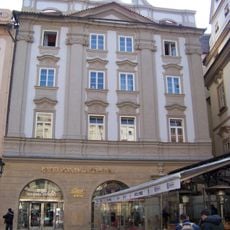
The house stands at the corner of Old Town Square and Malé náměstí, between the U Minuty and U Zlaté dvojky houses. The ground floor is glazed and holds a café, while the upper floors serve the Scout Institute of A. B. Svojsík; the sgraffito façade and the corner bay window are best seen from the square outside.
The corner niche on the first floor once held a statue of the house's patron, Saint Wenceslas. Since the Janák reconstruction it has been kept in the Lapidarium of the National Museum, where it has been displayed in the Renaissance hall since 2010.
The community of curious travelers
AroundUs brings together thousands of curated places, local tips, and hidden gems, enriched daily by 92,369 contributors worldwide.