MO-S 5 Na trati casemate, Infantry casemate museum in Starý Bohumín, Czechia
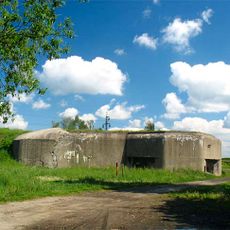
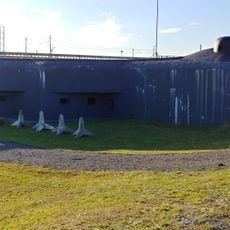
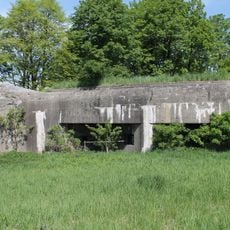
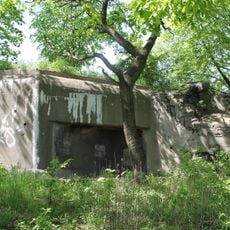
MO-S 5 Na trati is a two-storey infantry casemate split by a railway line into two single-sided blocks, MO-S 5a and MO-S 5b, linked by a 22-metre underground corridor. Built in 1936 of 4,314 cubic metres of concrete, it has two armoured bells weighing 43,890 kg and 41,270 kg, plus embrasures for 4 cm anti-tank guns and machine guns.
Concrete was poured between 19 and 29 July 1936 by Dr. Karel Skorkovský's Prague firm, using 4,314 m³ of concrete. After the Munich Agreement, Czechoslovak troops left in November 1938 and Polish forces took the casemate; German troops occupied it without a fight in 1939 and removed the armoured bells and gun ports. Late in the war it held an anti-aircraft post and an ammunition store.
The bunker's name, "Na trati", means "on the railway line", reflecting its original position straddling the Bohumín–Chałupki track. The Bohumín Military History Club, which has cared for the site since 1999, has refurnished the interior with period furniture, telephones, a radio station and a stove, and in 2004 staged a re-enactment of the 1945 fighting for Bohumín.
The bunker requires visitors to navigate narrow corridors and low ceilings, so comfortable clothing and a certain level of mobility are helpful. Visiting during spring or fall offers a better experience than summer when more tourists arrive.
The site was built with armored rotating turrets equipped with machine guns, reflecting engineering techniques of the 1930s. These heavy gun positions could swivel to cover different angles of approach to the border crossing.
The community of curious travelers
AroundUs brings together thousands of curated places, local tips, and hidden gems, enriched daily by 93,609 contributors worldwide.