Vildenberk, Medieval castle ruins in Pozořice, Czech Republic
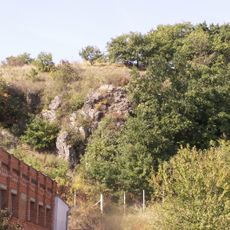
Vildenberk is a castle ruin set on a wooded ridge rising about 60 meters above the surrounding valley, with two deep defensive ditches cutting across the site. The structure includes a front section measuring roughly 48 by 31 meters and a main area extending about 137 meters in length.
The castle's origins are uncertain; its size suggests royal foundation by Wenceslaus II, and it is first mentioned in 1317 through Půta of Vildenberk. In 1371 Margrave John Henry bought the estate, and his son Jošt sold it off between 1385 and 1406, after which the castle was abandoned.
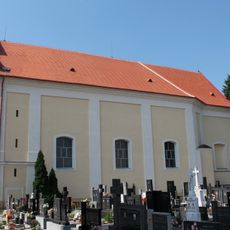
Stone from the castle walls was repurposed to build a Baroque church and manor house in Pozořice, showing how this ruin shaped the local community.
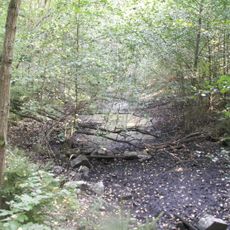
The ruins lie northeast of Pozořice, above the Mokrá quarry area; the site has no marked trail or facilities, so approach on foot through the woods and watch for the defensive ditches cut into the ridge. Ground is uneven and overgrown in places, and the surviving masonry is fragmentary.
In 2024 archaeologists uncovered, beneath a later kiln at the Mokrá quarry, the remains of a vast medieval lime kiln dated to the 13th–14th century, the largest of its kind known in Moravia and possibly Europe. Its capacity may have supplied the lime for building Vildenberk, about 3 km away.
The community of curious travelers
AroundUs brings together thousands of curated places, local tips, and hidden gems, enriched daily by 92,345 contributors worldwide.