Vodní tvrz Jeseník, Water castle in Jeseník, Czech Republic
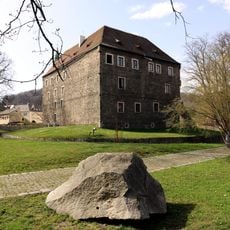
Vodní tvrz Jeseník is a free-standing two-storey building of three wings, built of rough stone around a small courtyard, with a stone bridge over the former water moat and a stone entrance gate at the front. The moat was fed by the Bělá river; the tower's ground floor, now the main entrance, is the remnant of the medieval fortification.
Archaeological research in the 1970s dated the original fortified tower to the late 1320s, not the 13th century. In 1468 the water castle was bought by Rudolf of Rüdesheim, Bishop of Wrocław, and in 1547 it passed definitively to the Wrocław bishops. A fire in 1727 led to its rebuilding as a chateau in 1738–1745 under Bishop Franz Ludwig von Pfalz-Neuburg.
The fortress houses a regional museum where visitors can explore displays about everyday life, crafts, and the history of the surrounding area. The objects on show come from the region and give a concrete sense of what life was like here over the centuries.
The entrance is right on Castle Square in the center of town, so it is easy to find on foot from most of the surrounding area. Guided tours of the interior are available and worth taking, as many details inside are hard to follow without explanation.
Three stone balls set into the northern facade are said to recall the Swedish siege during the Thirty Years' War, when the fortress was unsuccessfully attacked. A marble plaque left of the gate commemorates composer Karl Ditters von Dittersdorf, who served as Jeseník's district governor here in the late 18th century.
The community of curious travelers
AroundUs brings together thousands of curated places, local tips, and hidden gems, enriched daily by 92,182 contributors worldwide.