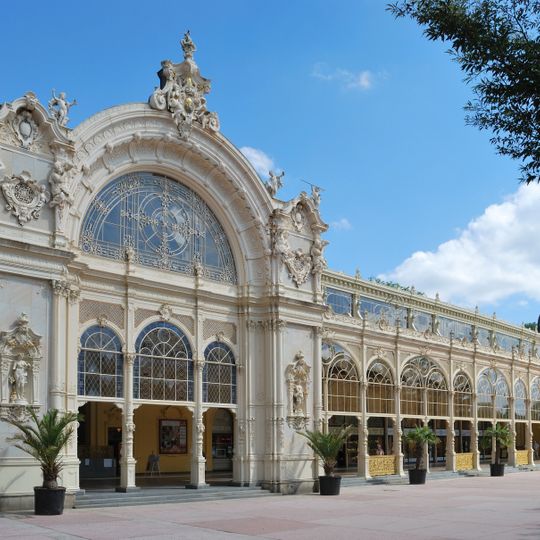
Lázeňská kolonáda, National cultural monument colonnade in Mariánské Lázně, Czech Republic
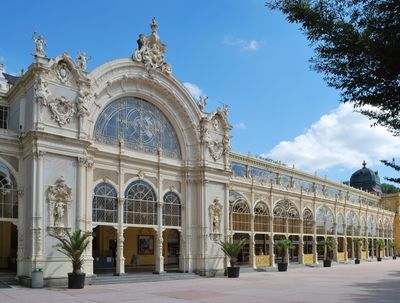
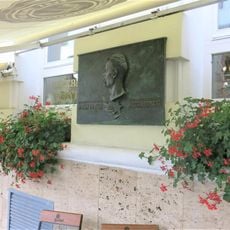
The Lázeňská kolonáda, also called the Colonnade of Maxim Gorky, is a neo-baroque cast iron colonnade 180 metres long, cast at the Blansko ironworks and assembled in 1888–1889 to the design of Hans Miksch and Julian Niedzielski. Its restored coffered ceiling carries frescoes by Josef Vyleťal on the theme "Man's desire to fly", and bronze reliefs by Antonín Kuchař line the walls.
This structure was designed in 1888 by Vienna-based architects Hans Miksch and Julian Niedzielski. Its iron components were manufactured at the Blansko ironworks in Moravia.
The colonnade is named after Maxim Gorky, who stayed in Mariánské Lázně in 1923–1924; in 1951, mid-season, the town honoured the guest by giving the structure his name. The ceiling frescoes by Josef Vyleťal, dated 1979, are titled "Touha člověka létat" (The Desire of Man to Fly), and the bronze wall reliefs are by Antonín Kuchař.
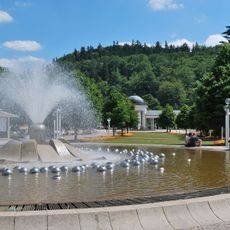
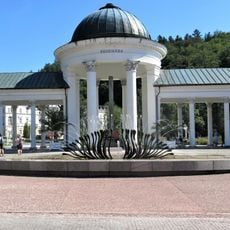
The colonnade forms the core of the main spa promenade, linking the Cross Spring pavilion with the Rudolf and Karolina Spring pavilion and the Singing Fountain. Its covered cast-iron walkway gives shelter in rain, and the 1986 reconstruction shortened it by removing the market annex.
During World War II, the structure came close to being dismantled for weapons manufacturing but survived intact. This means its cast iron framework and artistic embellishments from the 1800s remain largely in their original form.
The community of curious travelers
AroundUs brings together thousands of curated places, local tips, and hidden gems, enriched daily by 94,118 contributors worldwide.