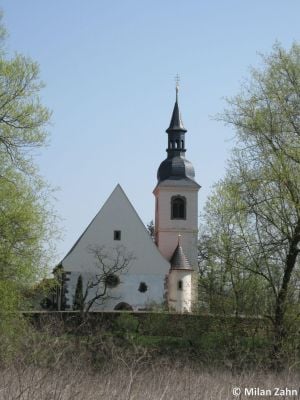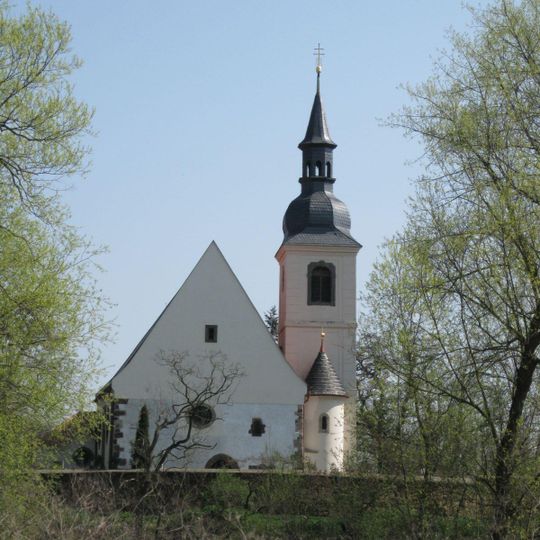
Church of Saint George and the Virgin Mary, Gothic church in Doubravka, Czech Republic.
The Church of Saint George and the Virgin Mary stands in Doubravka near the confluence of the Berounka and Úslava rivers. Its Romanesque apse survives from the original small rectangular building, while the nave was widened around 1350 and given a Gothic presbytery. A tower with a Baroque lantern rises at the south side, and a Baroque ossuary stands in the surrounding cemetery.
The first written record dates from 1361, when Frána z Chrástu was installed as parish priest; around 1350 the church was enlarged by moving its north wall, whose imprint remains on the floor. Badly damaged during the Hussite siege of Plzeň in 1433–1434, it was repaired from 1480 after indulgences were granted in 1475. In 1565 the city bought the patronage from Břevnov Abbey and the church became a filial church of St Bartholomew.
The church gave its name to the surrounding cemetery and the now-vanished village of Týnec, whose patronal disputes with the Břevnov monastery ended in 1540 when Plzeň bought the village and resettled its inhabitants. A small bell cast in 1662, 41 cm across and weighing 38 kg, survives as the death knell.
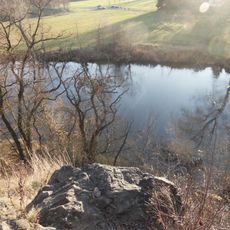
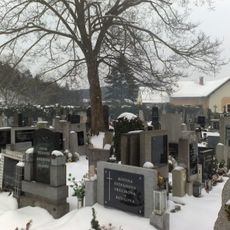
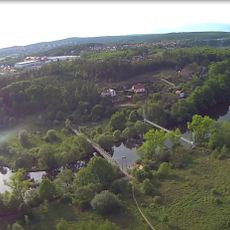
The church stands in Doubravka on the bank at the confluence of the Berounka and Úslava, near the site of the vanished village of Týnec. The interior is not open to the public; visitors see the exterior, the cemetery with its valuable tombstones and the Baroque ossuary. The building is a protected cultural monument of the Czech Republic.
The small bell cast in 1662, just 41 cm across and 38 kg, is the only one to survive; it was rung as the death knell. A larger bell by Jan Perner from 1719 was requisitioned during World War I.
The community of curious travelers
AroundUs brings together thousands of curated places, local tips, and hidden gems, enriched daily by 92,810 contributors worldwide.