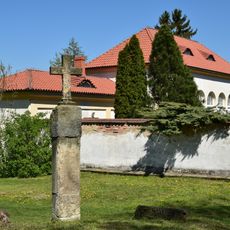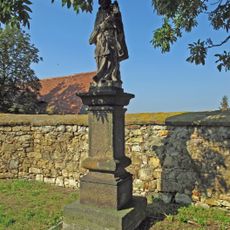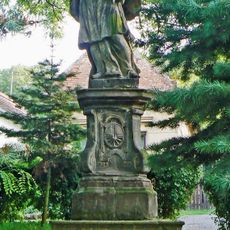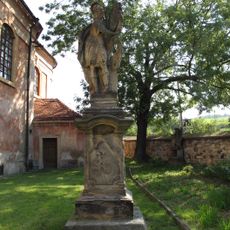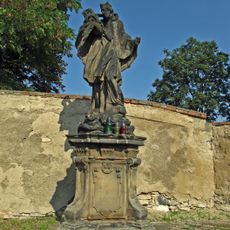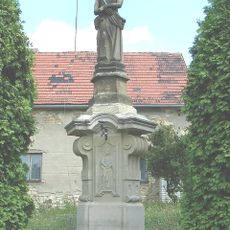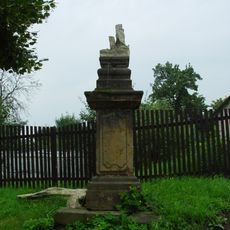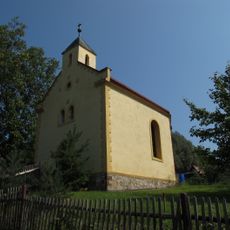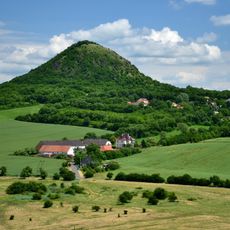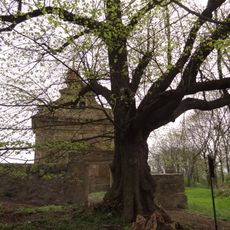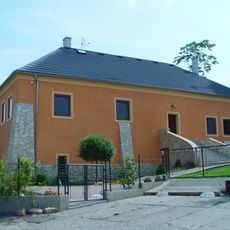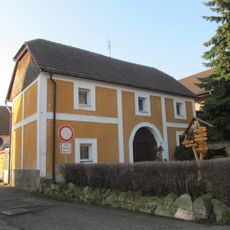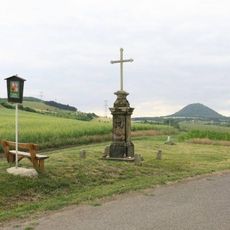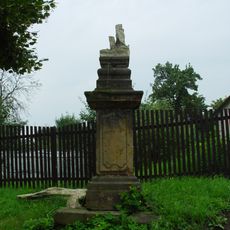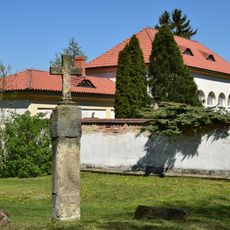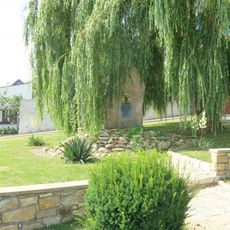
Milá, Nature reserve in North Bohemia, Czech Republic
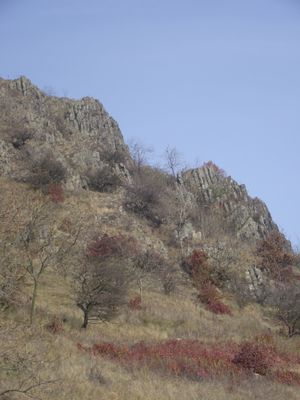
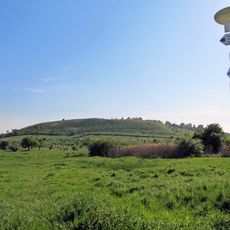
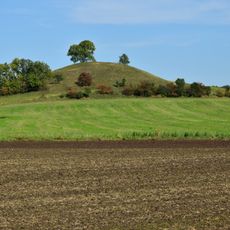
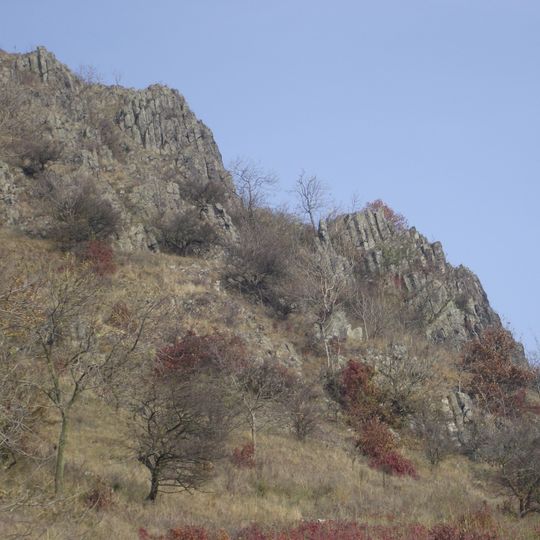
Milá is a 510 m conical hill in the České středohoří, about 12.5 km southeast of Most, protected as a 19.94 ha nature reserve since 1958. Its slopes carry rock steps, columns and boulder fields of black nepheline basalt, with columnar jointing visible on the southwest and southeast sides.
Milá was first declared a protected area on 10 April 1946 by the district national committee in Bílina, then designated a state nature reserve by the Ministry of Education and Culture on 25 February 1958. In 1987 its buffer zone was enlarged. The hill has been farmed since the Neolithic, and grazing shaped its grasslands until it faded around the mid-19th century.
Grazing shaped the reserve's grasslands until the mid-19th century, when herders gradually abandoned pasture for intensive farming. Thorny species such as stemless carline thistle, field eryngo and viper's bugloss still mark the former pasture grounds. The village of Milá below the hill is part of the municipality of Bečov.
Marked trails wind through the reserve and link to nearby towns, making navigation straightforward for visitors. Spring and autumn provide the best conditions for observing wildlife and plants throughout the area.
The rowan Sorbus milensis was described from this hill in 2008. The reserve also holds the westernmost European stations of Viola ambigua and Allium strictum, and the grasshopper Stenobothrus eurasius bohemicus, endemic to the České středohoří, brought it into Natura 2000.
The community of curious travelers
AroundUs brings together thousands of curated places, local tips, and hidden gems, enriched daily by 92,588 contributors worldwide.