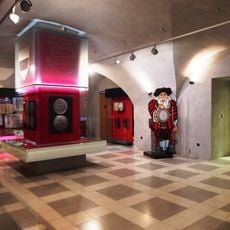
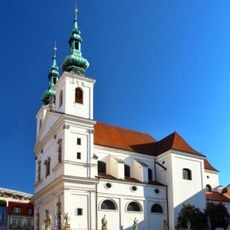
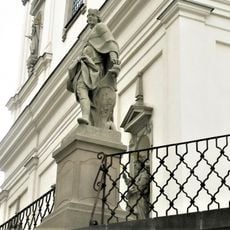
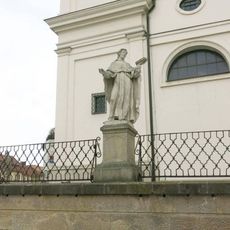
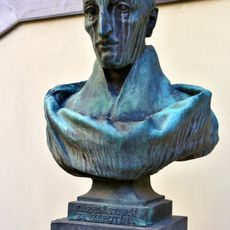
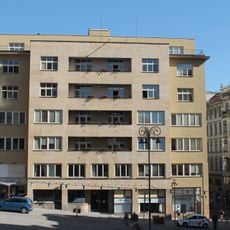
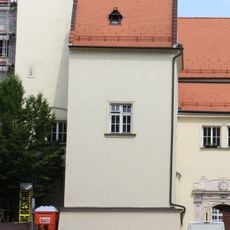
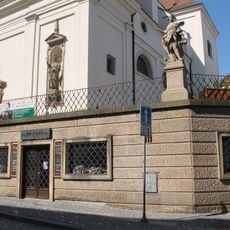
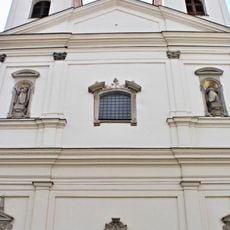
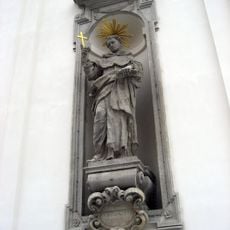
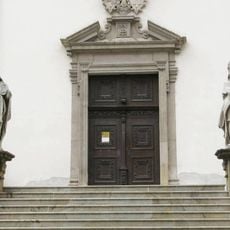
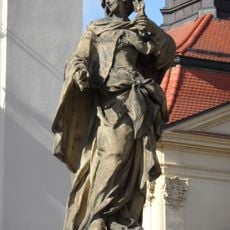
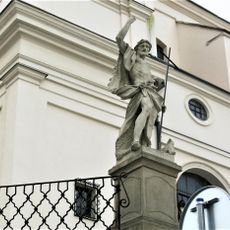
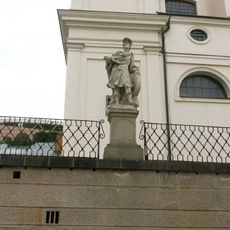
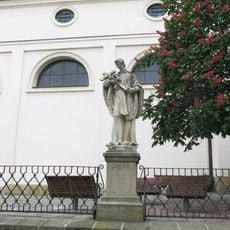
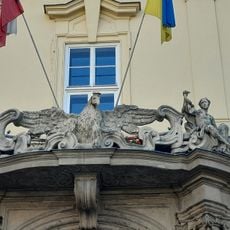
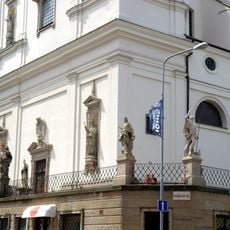
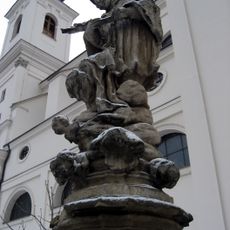
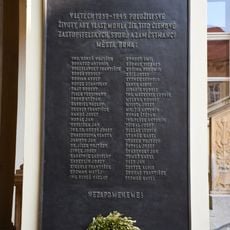
Nová radnice, Town hall monument in Dominikánské náměstí, Brno, Czech Republic.
Nová radnice is a complex of Baroque buildings on Dominikánské náměstí, formed around two courtyards from the former Dominican monastery and the Moravian provincial administration buildings. Its main facade facing the square was built by Mořic Grimm in 1726–1729, and the wing between the two courtyards dates from 1717–1719. The outdoor Renaissance staircase beside the chapter house survives from Pietro Gabri's 1582–1585 assembly rooms.
The complex grew from a Dominican monastery founded after 1240, whose chapter house hosted Moravian provincial courts; Charles IV merged four provincial courts into one land court there in 1348. In 1578 the estates commissioned Pietro and Antonio Gabri to build assembly rooms above the chapter house, completed 1582–1585. The site became Brno's New Town Hall in 1935 after Josef Polášek's 1934–1935 conversion.
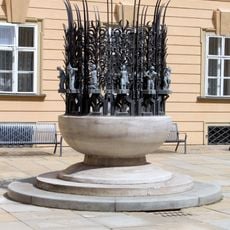
The name Nová radnice dates only from 1934–1935, when Josef Polášek's conversion turned the former Stavovský dům into the city offices. In the courtyard stands a fountain made by Josef Stejkal and J. Pešek for the 1928 Exhibition of Contemporary Culture; a bust of Karel the Elder of Žerotín by Vincenc Makovský was unveiled beneath the outdoor Renaissance staircase a year later.
The exterior and square are accessible year-round, while interior visits are available at specific times. It helps to check ahead which areas are open to visitors, as conditions can change depending on city events.
The small courtyard fountain was made by Josef Stejskal and J. Pešek for the 1928 Exhibition of Contemporary Culture at Brno's exhibition grounds, and installed here in 1935. During the Second World War it was moved to today's Janáčkovo náměstí, then returned after the war by decision of the city's National Committee.
The community of curious travelers
AroundUs brings together thousands of curated places, local tips, and hidden gems, enriched daily by 92,649 contributors worldwide.