Pirkštejn, Castle in Rataje nad Sázavou, Czech Republic
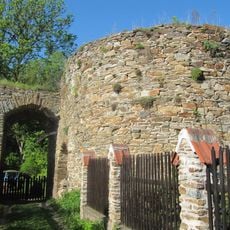
Pirkštejn is the lower castle of Rataje nad Sázavou, founded in the 14th century by Jindřich of Lipá. Its round bergfried is wrapped by a curtain wall, and a three-room palace stands on the most protected rear part of the promontory. Between 1713 and 1724 it was rebuilt as a parish house with a bell tower.
Pirkštejn was founded in the first third of the 14th century by Jindřich of Lipá, together with the upper castle of Rataje; both are first documented in 1346. In the 1360s the castle passed to the lords of Pirkštejn, who named it after their family seat Sloup (German Bürgstein). Damaged during the peasant revolt of 1627, it was abandoned and rebuilt in 1713–1724 as a parish house with a bell tower.
The castle's name comes from the Lords of Pirkštejn, who took it from their family seat Sloup, called Bürgstein in German. Hynce Ptáček of Pirkštejn, a leading politician after the Hussite wars, died at Rataje on 27 August 1444 and was buried in the church of Saint Matthew. Milan Kundera mentions the castle, as Ptáček Castle, in his story collection Laughable Loves.
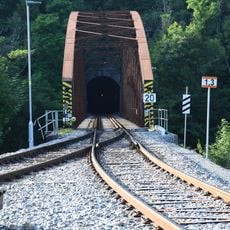
The ruin is visible from the railway line, with several nearby stations providing access to the area. The site is freely accessible year-round but offers limited pathways and requires sturdy footwear for uneven ground.
The castle's name comes from the Lords of Pirkštejn, who took it from their ancestral seat Sloup, called Bürgstein in German. The Czech writer Milan Kundera mentions the castle, calling it Ptáček Castle, in his story collection Laughable Loves.
The community of curious travelers
AroundUs brings together thousands of curated places, local tips, and hidden gems, enriched daily by 92,209 contributors worldwide.