Písečný přesyp u Píst, Special area of conservation in Písty, Czech Republic
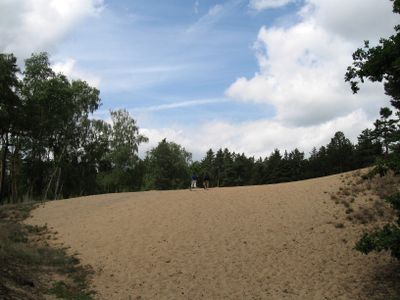
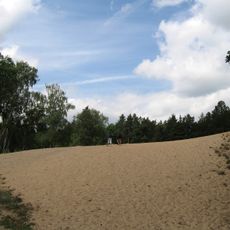
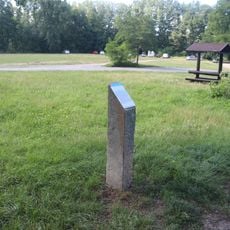
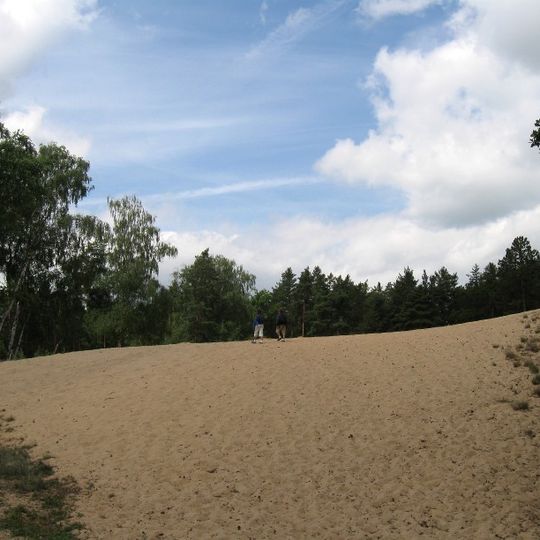
Písečný přesyp u Píst is a massive Pleistocene wind-blown sand dune on the left bank of the Labe at 185–193 m, the best-preserved dune in the Czech Republic. Its open continental-dune grassland grows grey hairgrass and common bentgrass.
The dune was first protected in 1951 by a decree of the Ministry of Education, Youth and Sports, and re-declared in 2012 by Central Bohemian Region regulation no. 15/2012, which revoked the 1951 decree. In 2009 it was also designated a Natura 2000 site of European importance. Excavations here uncovered almost 300 chipped stone tools, some with traces of fire, making it one of Bohemia's most important Mesolithic sites.
The name přesyp refers to a wind-blown sand dune, and the site lies in the Písty cadastre near Nymburk. It is one of Bohemia's most important Mesolithic sites: excavations yielded almost 300 chipped stone tools, some with traces of fire. Finds also come from Bell Beaker, Hallstatt, early Roman and medieval periods.
The dune lies on the left bank of the Labe at 185–193 m above sea level, on the eastern edge of the Kersko-Bory Nature Park in the Písty cadastre near Nymburk. The open sand turf is the protected subject, so walking is best kept to existing paths; the surface is loose sand.
The dune is considered the best-preserved in the Czech Republic. Excavations here yielded almost 300 chipped stone tools, some bearing traces of fire, making the site one of the most important Mesolithic locations in Bohemia.
The community of curious travelers
AroundUs brings together thousands of curated places, local tips, and hidden gems, enriched daily by 94,096 contributors worldwide.