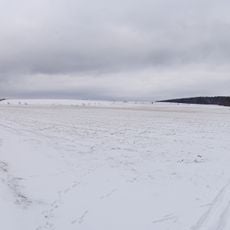
Staré Hradisko, Celtic fortified settlement in Malé Hradisko, Czech Republic
Staré Hradisko is a Celtic oppidum on a promontory between the Okluka stream and an unnamed right-bank tributary, about 1 km east of Malé Hradisko. Its 2,770 m of walls enclose 37.5 ha divided into a 13.5 ha western bailey, a 23.5 ha central acropolis and a smaller eastern bailey. Excavations uncovered courtyards of about 50 × 50 m with houses, workshops and paved lanes.
The site was already occupied by an upland hillfort in the older Iron Age before the oppidum was built. The oppidum is known since the Middle Ages for abundant amber finds; the first written mention, as "Kadidlná mountain", dates from 1519, and Jan Dubravius's 1552 chronicle records myrrh finds at "Gradisco". Systematic excavation in 1934–1937 by Jaroslav Böhm and Josef Skutil was the first area excavation in Czechoslovak archaeology.
The Czech name Staré Hradisko means "old hillfort", and medieval writers called the hill "Kadidlná hora" (incense mountain) because amber dug up here was taken for myrrh. Excavations found evidence of ironworking, casting of base and precious metals, coin minting, and amber, bone and glass bead production.
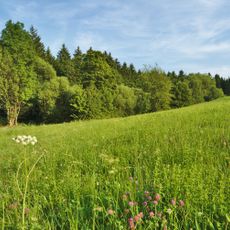
The site is best explored on foot, with paths leading across the grounds to view the remains from different angles. Spring and autumn offer the most comfortable conditions for walking the paths and observing the earthworks clearly.
Medieval writers knew the hill as a source of amber: a 1519 entry in the Olomouc land registers calls it "Kadidlná hora" and Jan Dubravius in 1552 and Comenius's 1627 map of Moravia record myrrh being dug there. The 1934–1937 excavation by Jaroslav Böhm was the first area-wide dig in Czechoslovak archaeology and the first site in the Czech lands photographed from the air.
The community of curious travelers
AroundUs brings together thousands of curated places, local tips, and hidden gems, enriched daily by 92,168 contributors worldwide.