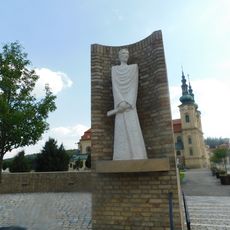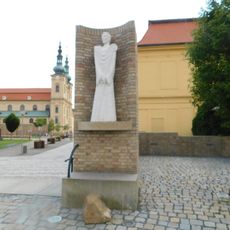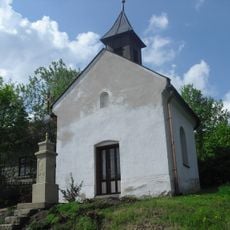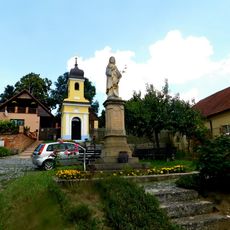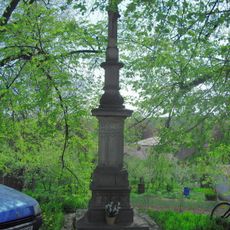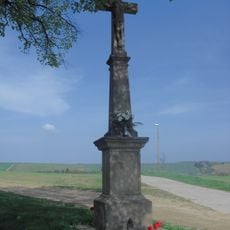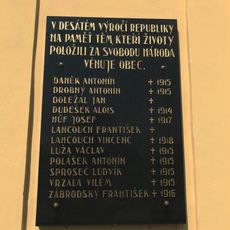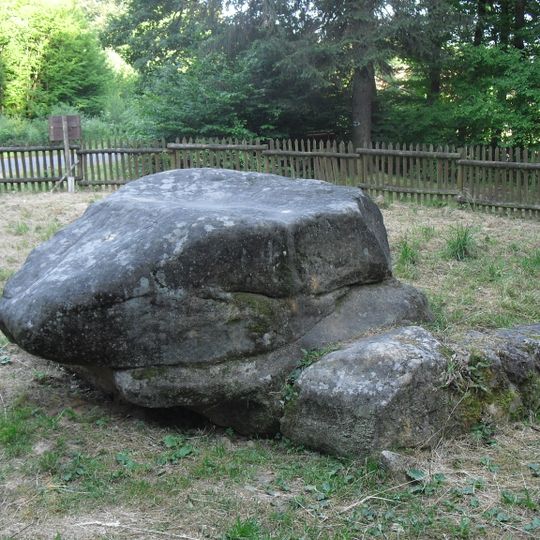
Králův Stůl, Memorial stone in Velehrad, Czech Republic
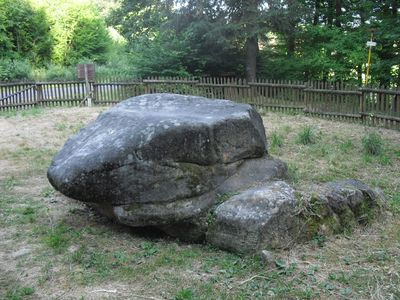
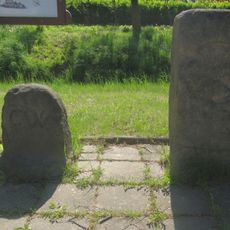
Králův Stůl is a coarse-grained sandstone block about 2.6 × 1.9 × 1 m, brownish to light grey, with a lower part that passes from sandstone into fine conglomerate. It was originally made of three parts; the eastern side piece was broken up and used as gravel for road building in the mid-19th century, while the western fragment measures 115 × 65 cm. The stone was shaped into the form of a sacred animal (bull's head or horse's back) and from the side resembles an anvil.
The formation dates back to prehistoric times and may have been used by early inhabitants of the region as a marker or reference point. The site played a role in Czech history, particularly as a boundary marker between different regional territories.
Local legends say the stone served as a banquet table for Přemysl Otakar I, Charles IV or Matthias Corvinus, though excavations found no animal bones or broken dishes. Mid-19th-century scholars held that Slavic tribal kings were elected here and took power by sitting on the stone. The name Králův stůl, "King's Table", comes from these stories.
Králův stůl stands directly beside the Modrá–Zdounky road, which carries cycle route 5013 and the blue-marked section of the Cyrilometodějská stezka; the nearest village is Jankovice, 1 km away. Access is by road or on foot along the marked route, not by separate hiking trails.
The stone shows ancient markings that resemble early European writing systems and raise questions about the site's early inhabitants. Archaeologists continue to debate the exact meaning of these markings and their origins.
The community of curious travelers
AroundUs brings together thousands of curated places, local tips, and hidden gems, enriched daily by 92,641 contributors worldwide.