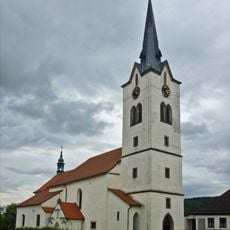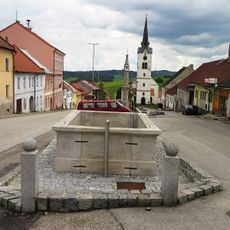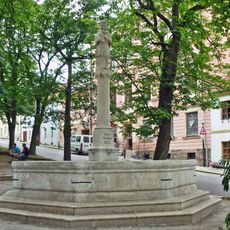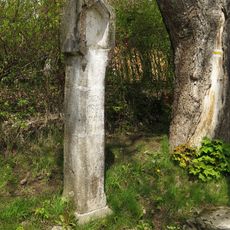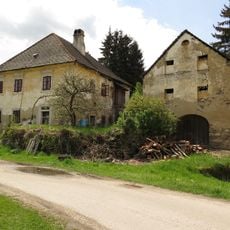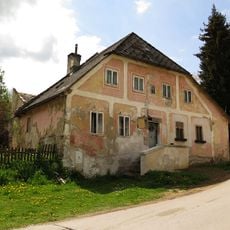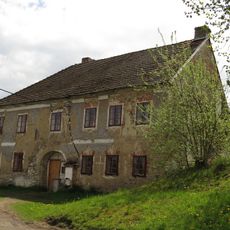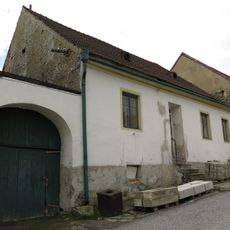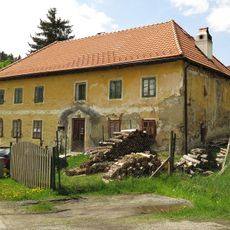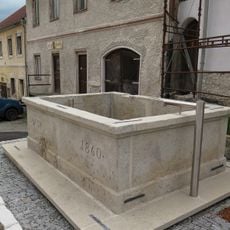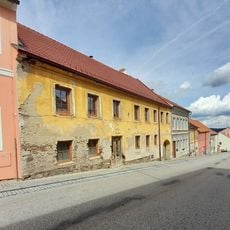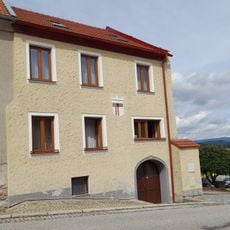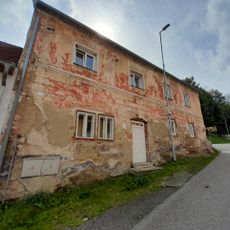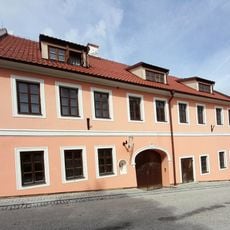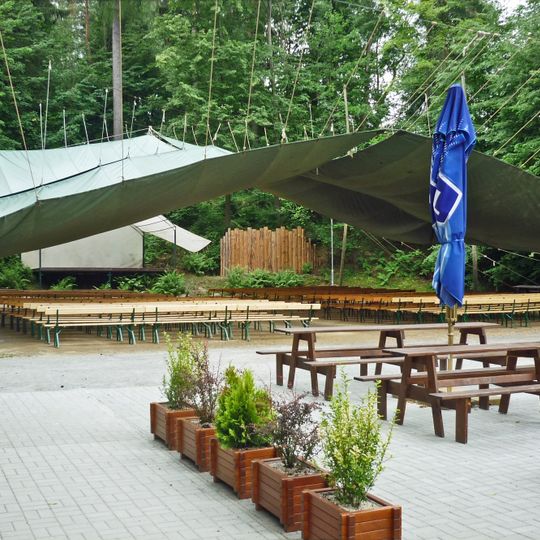
Horice passion play, Open-air passion theatre in Hořice na Šumavě, Czech Republic.
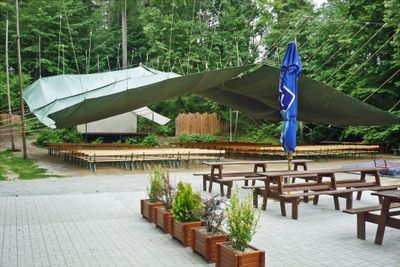
The Hořice Passion Play is performed at an open-air theatre built in 1892–1893 below the former St. Anne pilgrimage chapel in Hořice na Šumavě; its architect was Jakob Stabernak of Budweis. The auditorium held 1,700 seats, enlarged to 2,000 after the first season. The stage presents scenes from the Last Supper to the Crucifixion, acted by local amateurs.
Passion plays were documented in Hořice from 1816, when weaver Paul Gröllhesl wrote a text with the local priest. Ethnographer Johann Josef Ammann reworked it in 1887 along the lines of Oberammergau, and a dedicated theatre by Jakob Stabernak opened below the St. Anna chapel, with the first large performance on 25 June 1893. The Nazis banned the plays in 1939 and the building became a military store.
The plays are performed by local amateur actors, not professionals. Since 1923 a Czech-language text has existed, and after 1945 the tradition continued in Czech under director Jaroslav Tomáš Vetešník and priest Jan Václav Straka. The current production, premiered in 1993, uses a text by Jindřich Pecka and music by Jaroslav Krček.
Performances are held in the natural theatre below the former St. Anna pilgrimage chapel, where the 1893 festival house stood until its demolition in 1966. The village also has a museum devoted to the passion plays, so allow time for it alongside the open-air stage.
The 1897 Hořice Passion Film, shot during the plays, is considered the first film made on the territory of today's Czech Republic and the world's first full film adaptation of a stage play. A fragment was later found in the film archive in Madrid.
The community of curious travelers
AroundUs brings together thousands of curated places, local tips, and hidden gems, enriched daily by 94,498 contributors worldwide.