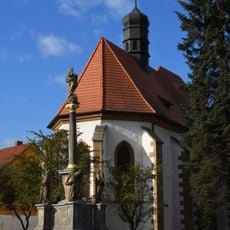
Hůrka, Medieval fortress on Hurka Hill in Stary Plzenec, Czech Republic
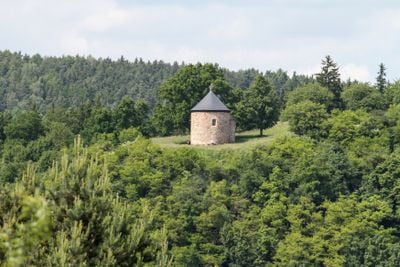
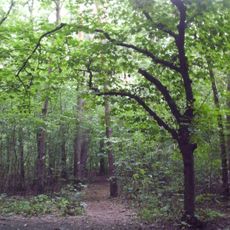
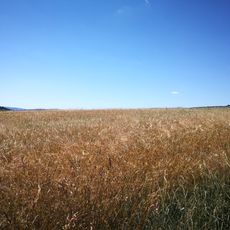
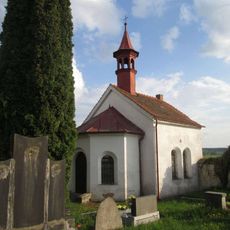
Hůrka is an early medieval hillfort on a long ridge above the right bank of the Úslava, north of Starý Plzenec. Its surviving rampart, nearly 10 m high, encloses 4.1 ha, with an acropolis and lower bailey. The Rotunda of Saints Peter and Paul stands in the lower bailey.
The first written record is Thietmar's chronicle phrase "iuxta Pilisini urbem", describing the defeat of a Bavarian army below Plzeň in 976 during the conflict between Emperor Otto and Prince Boleslav II. The stronghold, originally named Plzeň, was founded by the 10th century and briefly minted denarii of Prince Jaromír after 1010. It peaked in the 12th and early 13th centuries, then declined as the new town of Plzeň took over; the old site, called Stará Plzeň, was abandoned during the 14th century.
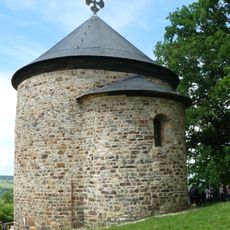
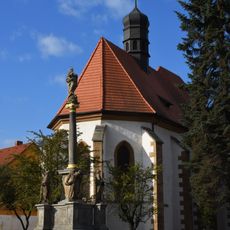
The Rotunda of Saints Peter and Paul is the only building still standing from the hillfort's lifetime, on the lower bailey west of the acropolis. Its construction is traditionally placed in the 10th century, though it may be later, and its present form results from many rebuildings. A path once led from it down to the western gate by the Úslava.
The site is accessible via a walking trail that starts in Starý Plzenec, roughly 9 kilometers from Pilsen. It functions as an open-air archaeological location that welcomes visitors throughout the year without requiring admission.
The Church of Saint Lawrence on the acropolis dates from the second half of the 11th century, not the 12th. Excavation showed that the foundations uncovered there belong to a later, smaller Gothic building. The Church of the Holy Cross, built in the 12th century, stood in the eastern bailey; its foundations were also uncovered by archaeologists.
The community of curious travelers
AroundUs brings together thousands of curated places, local tips, and hidden gems, enriched daily by 92,643 contributors worldwide.