Kostel svaté Máří Magdalény, Baroque church in Malá Strana, Prague, Czech Republic
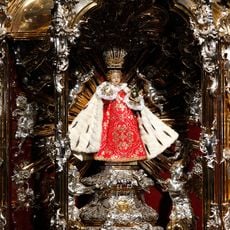
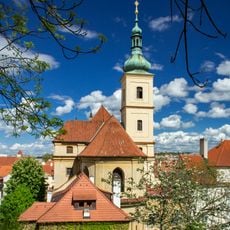
Kostel svaté Máří Magdalény is a baroque church characterized by ornate interior details, curved architectural elements, and rich decorative features typical of the style. The building displays the hallmark characteristics of baroque design with elaborate ornamentation throughout both its exterior and interior spaces.
A Gothic monastery church of the Magdalene nuns stood east of the present site by 1315 and was devastated during the Hussite wars. After 1630 Dominicans expelled from the Clementinum area settled here, and Count Karel Ignác Michna z Vacínova funded a new church designed by Francesco Caratti, built 1654–1709. Kryštof Dientzenhofer completed a revised project in 1709; the monastery was dissolved in 1783 under Joseph II.
The church takes its name from Saint Mary Magdalene, to whom the original 1315 convent of Magdalenites was dedicated. The present building served the Dominican order until 1783, when Joseph II's reforms dissolved the monastery. Since the 1990s the former church has housed the Czech Museum of Music, a branch of the National Museum.
The building stands at the corner of Karmelitská, Újezd and Hellichova streets in Malá Strana, with entrances at Karmelitská 2-4, Újezd 50 and Hellichova 10. The former side aisle, now an exhibition hall, is separated from the main nave only by a plasterboard partition. The passage cut through the western aisle to the street keeps its original paving.
In the floor before the former main altar was the Dominicans' crypt; the painters' guild buried Dionysio Miseroni there, and the tombstones of architects Kryštof and Kilián Ignác Dientzenhofer have not survived. The Michna family coat of arms in a baroque cartouche still sits on the cornice below the dome.
The community of curious travelers
AroundUs brings together thousands of curated places, local tips, and hidden gems, enriched daily by 94,004 contributors worldwide.