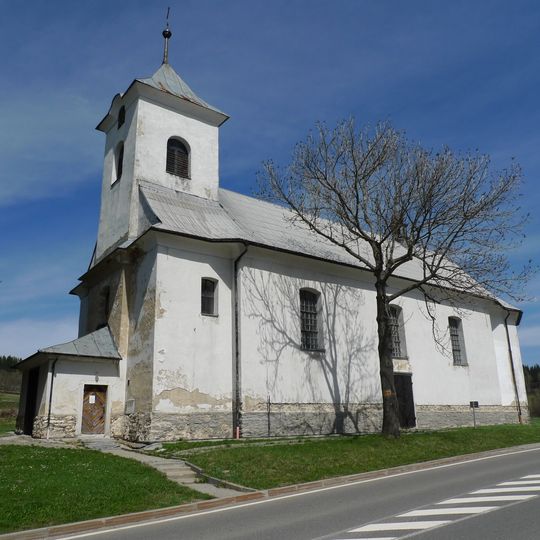
Kostel Zjevení Páně, Church building in Ostružná, Czech Republic
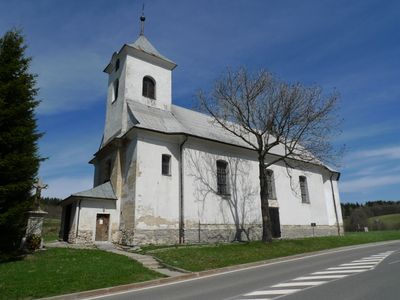
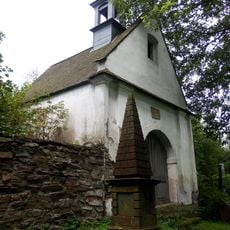
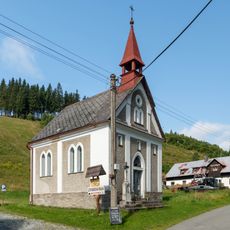
Kostel Zjevení Páně is a single-nave Neoclassical church with a white facade and a prominent cornice, built in 1794. Above the west window of the bell stage is a Christ monogram; over the presbytery sits a small bell tower with an onion dome. Entry is from the south through two doors, from the west via a vestibule, and from the north through the sacristy.
Kostel Zjevení Páně was built in 1794 for the woodcutters' settlement of Ostružná, with the permission of Emperor Joseph II. It was originally the parish church of an independent Ostružná parish; since 2004 it has belonged to the parish of Branná. After the dissolution of the Church of the Virgin Mary in Olomouc, two paintings were brought here: the Adoration of the Magi, placed on the main altar, and St. Andrew Velinský, on a side altar. On 18 March 2022 the church was declared a cultural monument by the Ministry of Culture.
The church holds two paintings brought from the abolished Church of the Virgin Mary in Olomouc: the Adoration of the Magi in the main altar and Saint Andrew Velinský in a side altar. The Baroque painter Jan Kryštof Handke mentions the Adoration in his autobiography for 1749; he based it on his own 1746 version made for the monastery in Šternberk.
Visitors should check with the local tourism office about opening times and accessibility before planning a visit, as the church may not always be accessible. It can be helpful to time your visit with religious services or when local guides are available.
The church bears the name Zjevení Páně, which means Appearance of the Lord and refers to the Epiphany celebration in Christian tradition. This naming connects the local community to an important moment in the church calendar.
The community of curious travelers
AroundUs brings together thousands of curated places, local tips, and hidden gems, enriched daily by 92,768 contributors worldwide.