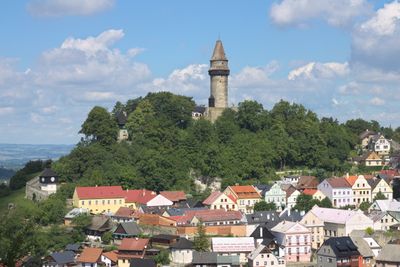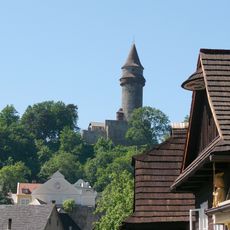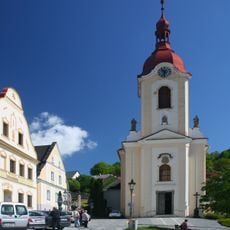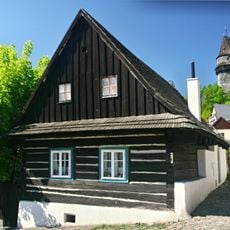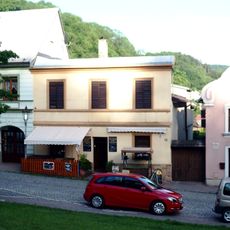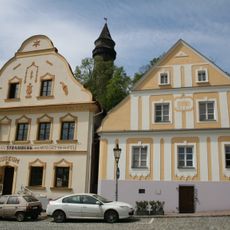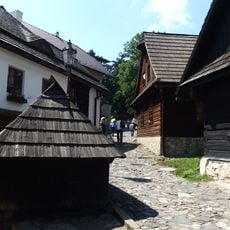
Štramberk, Medieval castle ruins in Štramberk, Czech Republic.
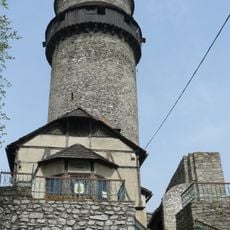
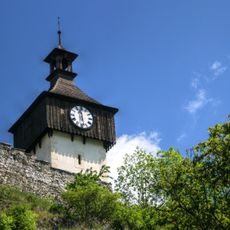
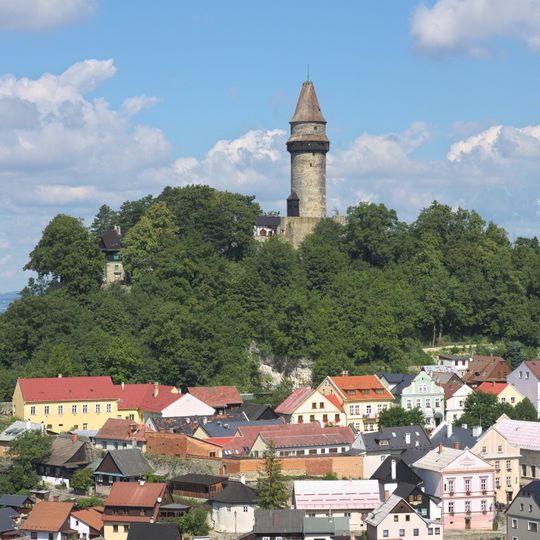
Štramberk is castle ruins in the Moravian-Silesian region with a cylindrical tower as the main structure. The tower called Trúba rises about 40 meters and has a diameter of about 10 meters, while the rest of the complex remains as wall fragments and foundations.
The castle arose in the first third of the 14th century, most likely founded by the Benešovci family. Margrave Jan Jindřich acquired it and had a new palace built in the outer ward, linking it to the town walls. From 1481 to 1523 the Hustopečí lords held it, then the Žerotínové, who had Jan Jindřich's palace rebuilt in Renaissance style before 1558. Jesuits maintained it from 1624 to 1773; after 1783 part collapsed and the masonry was quarried for building material.
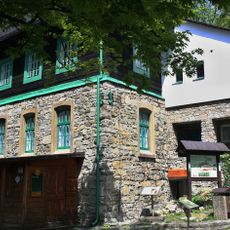
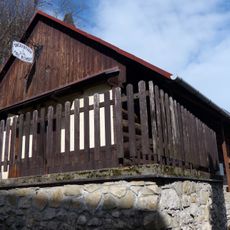
The castle core is named after the bergfrit tower called Trúba, a name meaning "horn" or "pipe". Since 1899 the Czechoslovak Tourist Club has built the Jaroňkova útulna and Hrstkova chata on the site; the latter now serves as a restaurant.
The ruins are accessible year-round without a ticket and can be visited freely. Climbing the tower is steep but the path is marked, leading to an observation platform with views across the surrounding countryside.
The castle core of the earliest phase was of the bergfrit type: a roughly rectangular layout about 30 by 15 metres enclosed by a wall 1.5 metres thick. The bergfrit known as Trúba stands in the north-eastern part, while a tower palace of 11 by 15 metres stood opposite; neither palace survives.
The community of curious travelers
AroundUs brings together thousands of curated places, local tips, and hidden gems, enriched daily by 92,617 contributors worldwide.