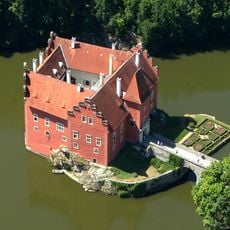
Pluhův Žďár Chateau, Medieval château in Pluhův Žďár, Czech Republic.
Pluhův Žďár Chateau is a fortified residence with medieval origins that blends Gothic core structures with Baroque farm buildings scattered across its grounds. The layout reveals different construction periods, from thick stone walls to later additions that expanded the complex.
The village was first documented in 1267, when Oldřich Pluh z Rabštejna held it; the fortress core dates to the late Gothic period and was rebuilt as a four-winged Renaissance residence around the mid-16th century. In 1635 Jan Ekersdorf z Hlaváče began its Baroque conversion into a chateau, continued by Humprecht Černín z Chudenic, with a second wave of Baroque work under the Deym family (1717–1782). The Paars owned it from 1793, and in 1928 Bedřich Beneš, brother of Edvard Beneš, bought it; confiscated after 1948, it was restituted in 1992.
The village and estate take their name from the Pluh family, documented here from 1267 with Oldřich Pluh z Rabštejna, who held the village until the 15th century. The chateau is a listed cultural monument since 1963, and visits are arranged by telephone with the owner.
Visits are possible only by prior arrangement by telephone with the owner, so call ahead before travelling. The chateau stands in the centre of Pluhův Žďár, about 10 km northwest of Jindřichův Hradec and 5 km north of Kardašova Řečice. The entrance on the north side is reached over a two-arch bridge leading into the courtyard.
The Baroque fresco of the Holy Trinity above the courtyard passage was painted in 1718 by František Resch, a painter from Jindřichův Hradec. Look for it after crossing the two-arched bridge to the north entrance. The courtyard walls also keep fragments of psaníčkové sgrafitto.
The community of curious travelers
AroundUs brings together thousands of curated places, local tips, and hidden gems, enriched daily by 94,350 contributors worldwide.