Upper mill, Watermill and cultural monument in Býšť, Czech Republic
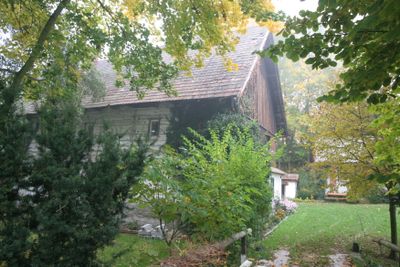
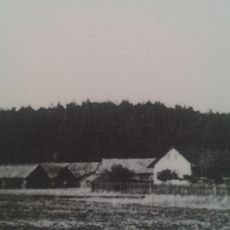
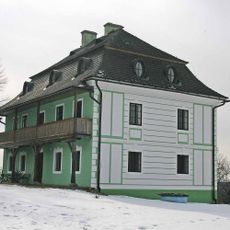
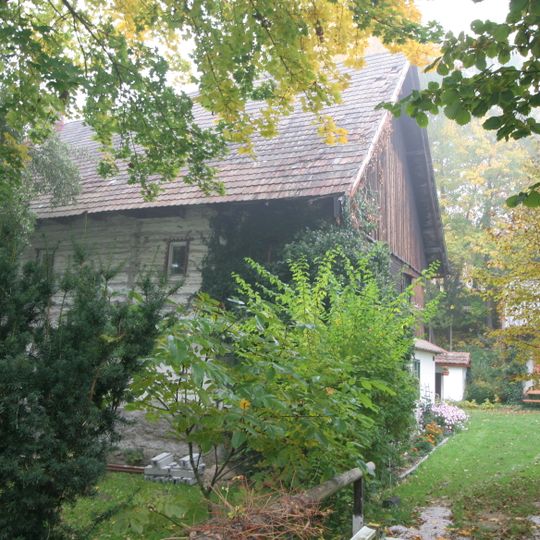
Horní mlýn is a one-storey watermill and dwelling with a gabled roof on a rectangular plan, standing in the northern part of Býšť on the Býšťský potok. Its ground floor is partly rubble stone and partly sandstone ashlar; the upper floor is timber-framed, with the rear of the mill room bricked in. Marks on the sandstone ashlar show where the upper water wheel once turned. The milling machinery itself has not survived.
The mill first appears on the 1840 map of the Imperial Obligatory Impressions, built on communal land. Its first recorded owner, Hein Johanes Heys, took it over on 4 April 1788 for 1,000 guilders. Václav Růžička, a native of Chlumčany in the Louny district, was the 17th and last miller; he inherited it from his father Jan, who bought it from an advertisement in 1912. Milling ceased in 1950.
The mill's name, Horní mlýn (Upper Mill), distinguishes it from other mills on the Býšťský potok. The last miller, Václav Růžička from Chlumčany in the Louny district, inherited it from his father Jan, who bought it in 1912 from an advertisement. Milling ceased in 1950.
The mill stands in the northern part of Býšť on the Býšťský potok, not on the Bytovka. It is a private, protected building, so view the sandstone mill house and the marks of the former water wheel from the lane outside. The site is reached on foot from the village centre.
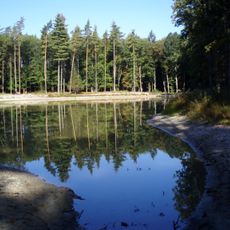
The mill's machinery has not survived; only the impressions of the former upper water wheel remain in the sandstone ashlar of the mill room wall. The headrace led water from a pond, and its old channel probably ran past the mill yard before joining the stream.
The community of curious travelers
AroundUs brings together thousands of curated places, local tips, and hidden gems, enriched daily by 92,745 contributors worldwide.