Knorův statek, Traditional homestead in Dolní Chabry, Czech Republic
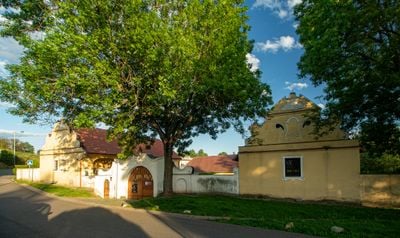
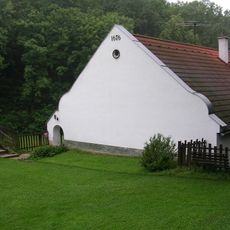
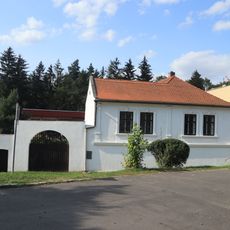
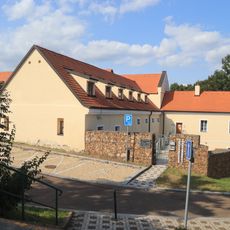
Knorův statek is a traditional farmhouse in Dolní Chabry with residential buildings, barns, and outbuildings characteristic of rural Czech architecture. The structures showcase how space was used for both living and agricultural work.
The first written record of the homestead dates from the 1654 Berní rula, when it belonged to Duchoslav Petržele and covered 60 strychů of land. By 1673 it had grown to 116 strychů under Jiří Svoboda, and from 1732 the Knor family farmed 125 strychů here. Václav Prušák bought it in 1917; his family held it until 1963, when collectivisation transferred it to the local national committee, and a collective farm used it until 1990.
The homestead shows how rural families organized their daily life and work around farming, with buildings arranged to reflect these practical needs. Visitors can observe the layout and structures that supported this agricultural way of living.
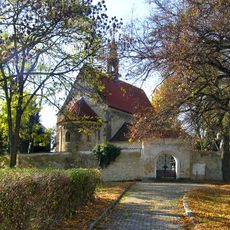
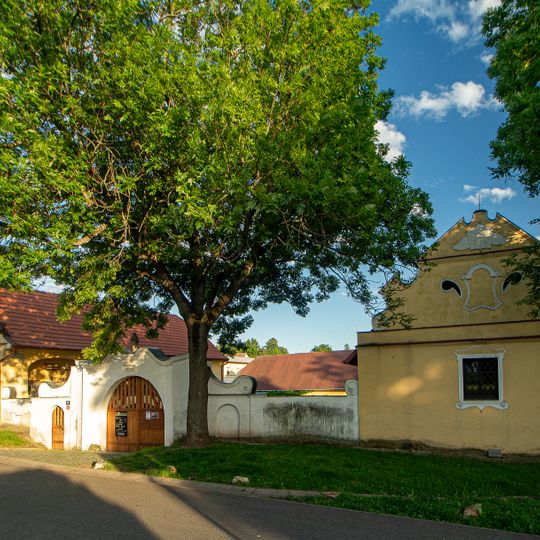
The homestead stands on Bílenecké náměstí in Dolní Chabry, east of the Church of the Beheading of St John the Baptist, in Prague 8. The courtyard is enclosed by a wall with a gate between the house and the granary, so the buildings are seen from the square and street. From 1990 the site housed a branch of the Museum of the Capital City of Prague.
The homestead's name recalls the Knorr family, who owned the farm from 1732 and cultivated 125 strychů of land. In 1917 Václav Prušák bought it from their descendants; his family held it until 1963, when collectivisation forced its transfer to the local national committee. From 1990 the Museum of the Capital City of Prague used the farm as a branch office.
The community of curious travelers
AroundUs brings together thousands of curated places, local tips, and hidden gems, enriched daily by 94,432 contributors worldwide.