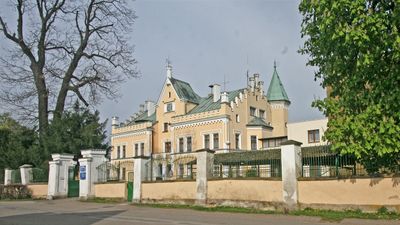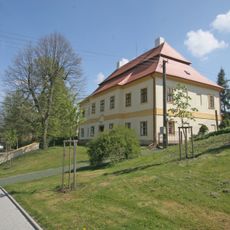
Zámek Hlušice, Neo-Gothic château in Hlušice, Czech Republic
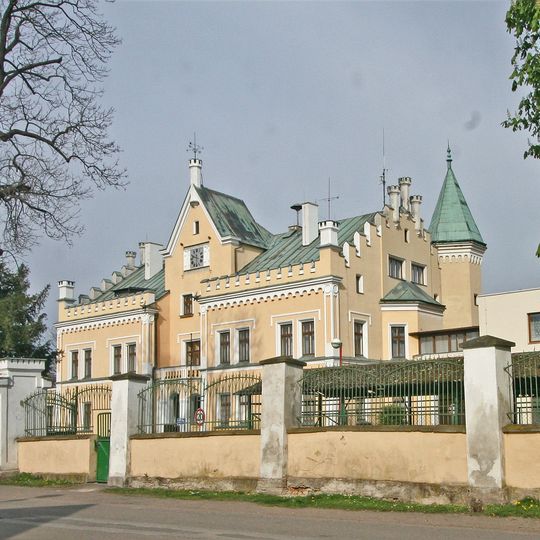
Zámek Hlušice is a single-storey neo-Gothic building on a rectangular plan, roughly symmetrical, with a recessed central bay topped by a steep gable bearing a clock face. The ochre facade with white trim has a parapet-like upper edge, stepped gables on the side wings and a polygonal turret at the southeast corner. Modern extensions flank the north and south sides.
Albrecht Kapoun of Svojkov, burgrave of Prague Castle from 1557 to 1569, built a Renaissance fortress here; it was damaged in the Thirty Years' War. Around 1700 the Martinic family had an early Baroque château built, probably by rebuilding the ruined fortress. It was demolished in 1789, and in 1852 Jakub Waagner had architect Eduard Halla design the present neo-Gothic château southeast of the old site.
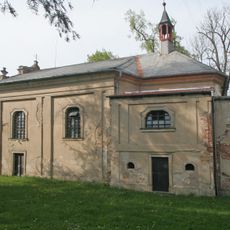
The Chapel of Saint Barbara on the grounds reflects how earlier owners integrated religious spaces into their estate. You can still see this small structure when walking through the property today.
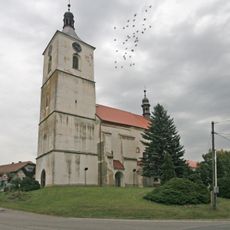
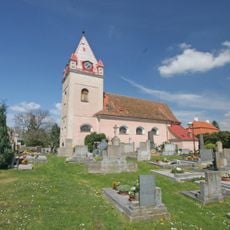
The château is used by the Střední škola technická a řemeslná as a vocational training centre, so the interiors are not open to the public. It stands on the northeastern edge of Hlušice, about 7 km from Nový Bydžov, and is clearly visible from the road to Janovice. The church of St. Wenceslas and St. Barbara lies about 50 m east of the building.
Joseph II's six-week stay in 1778 took place in the earlier Baroque château, not in today's building: that residence was demolished as dilapidated in 1789. The neo-Gothic château was only built in 1852 by Jakub Waagner to Eduard Halla's design.
The community of curious travelers
AroundUs brings together thousands of curated places, local tips, and hidden gems, enriched daily by 94,498 contributors worldwide.