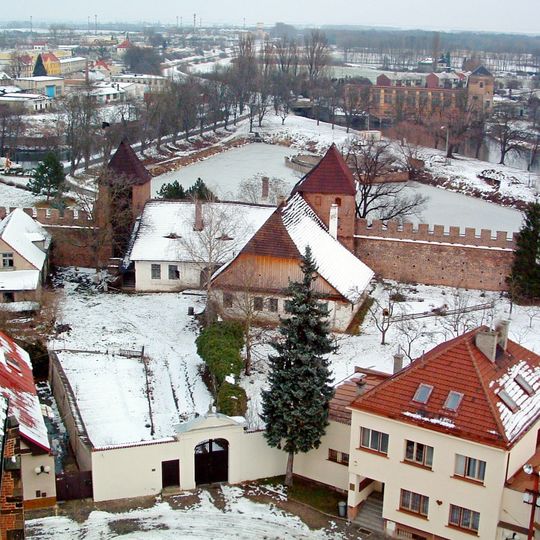
Deanery in Nymburk, Religious administrative building in Nymburk, Czech Republic.
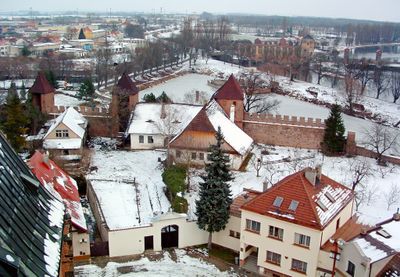
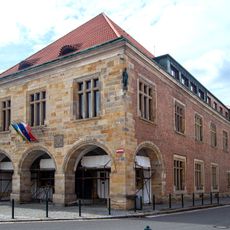
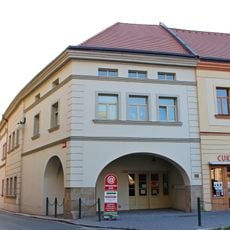
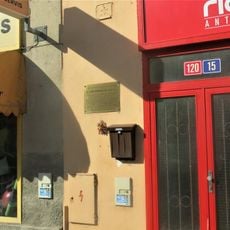
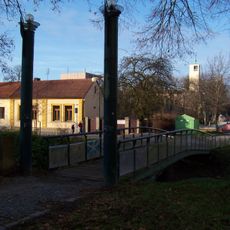
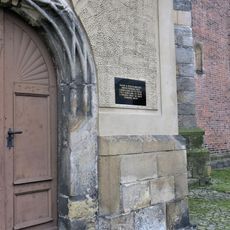
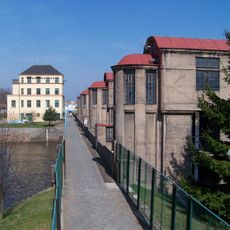
The Deanery in Nymburk is a Baroque complex built against the medieval town walls near St. Giles Church. It consists of a single-storey, two-winged stone-and-brick building in an L shape with a half-hipped shingle roof, smooth facades and the year 1792 above the entrance portal, plus the medieval wall tower Kaplanka adapted for housing. A Baroque masonry gate leads into the grounds.
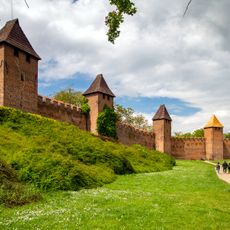
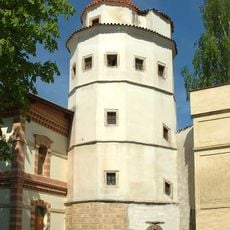
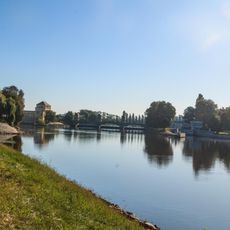
The medieval wall tower Kaplanka was built with Nymburk's fortifications between 1288 and 1305 beside the Elbe. The original deanery next to it burned after the Saxon invasion of 1631. After the Thirty Years' War the tower was repaired as a dwelling with a granary, its lower room used as a prison, and in 1657 a new deanery was added, finished by 1674 in unhewn logs as a provisional structure.
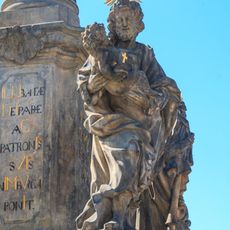
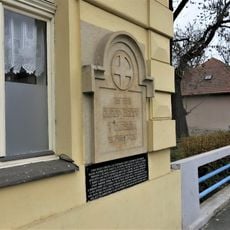
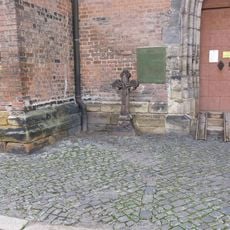
The name Kaplanka refers to the medieval wall tower that was converted into a dwelling with a granary after the Thirty Years' War; its lower room served as a prison. In 1968 tombstones from the abolished cemetery at St. George's church were placed in the grounds. Since a revitalisation from mid-April 2024 the complex serves as a social and cultural centre.
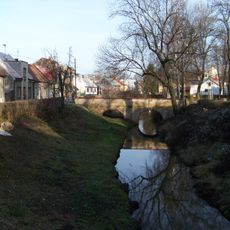
The complex stands by the Labe near St. Giles' Church, entered through a Baroque stone gate; the deanery is a single-storey L-shaped wing of stone and brick with a shingled half-hipped roof and the year 1792 above the portal. Inside are a large kitchen and vaulted Gothic cellars with a well. Since the 2024 revitalisation it serves as a social and cultural centre, so check opening times before visiting.
The lower room of the Kaplanka tower, the medieval fortification tower incorporated into the deanery, served as a prison. The tower itself was built with Nymburk's walls between 1288 and 1305, and after the Thirty Years' War it was repaired and converted into a dwelling with a granary.
The community of curious travelers
AroundUs brings together thousands of curated places, local tips, and hidden gems, enriched daily by 94,346 contributors worldwide.