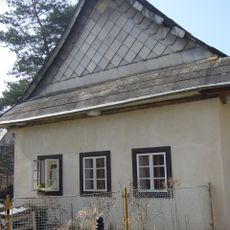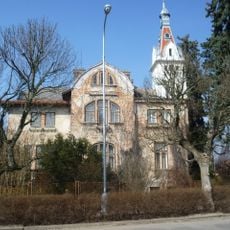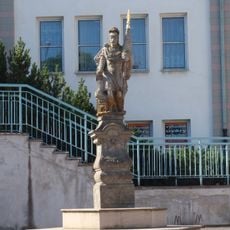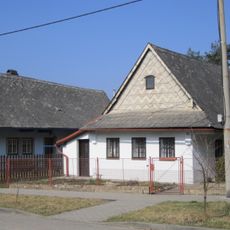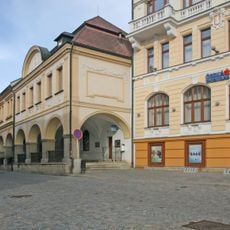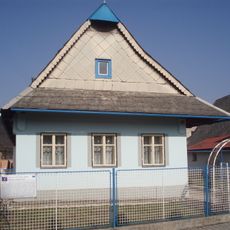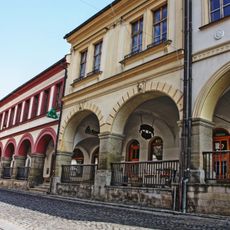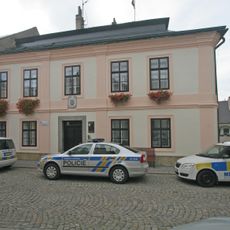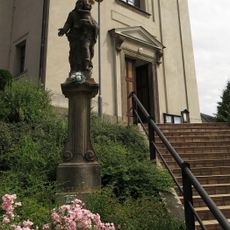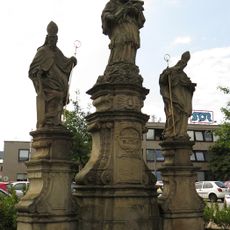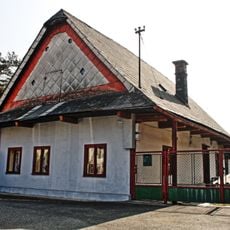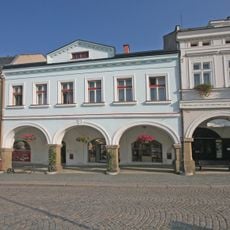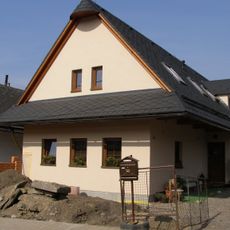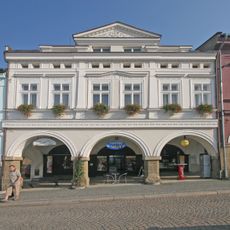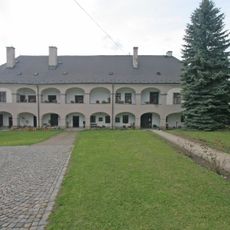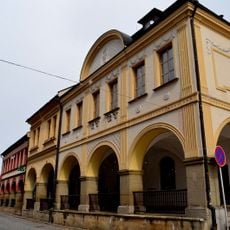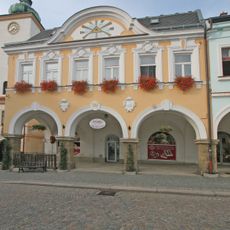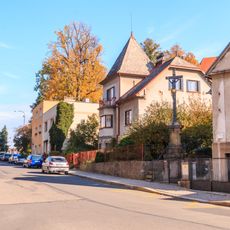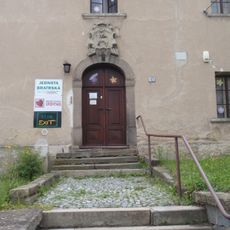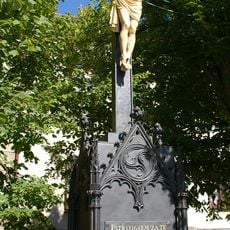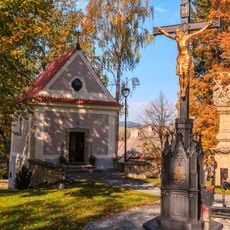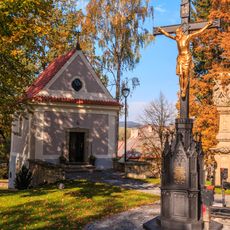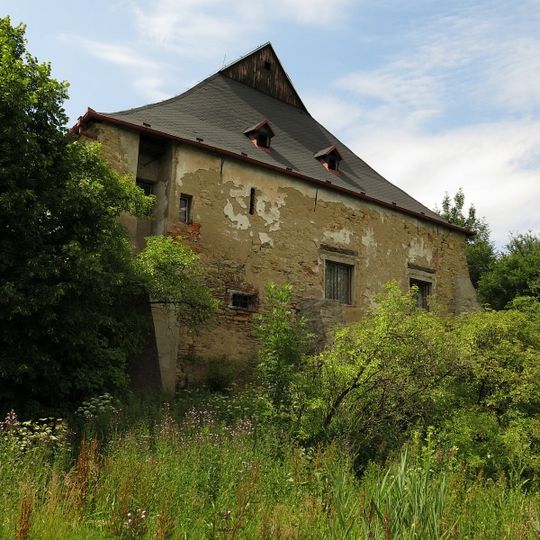
Dolní Libchavy Castle, Fortified house in Dolní Libchavy, Czech Republic.
Dolní Libchavy is a fortified house (tvrz) in the village of the same name north of Ústí nad Orlicí. Its oldest masonry, in the cellar, dates from the first half of the 16th century; the original wooden residential building was later replaced by a three-room stone structure, extended south after 1588. The main square room in the northeast corner measured 895 cm per side and had four windows with stone frames, later reused in a Baroque sheepfold.
Dolní Libchavy tvrz was probably founded in the first quarter of the 16th century as the seat of a noble estate; the first written mention dates from 1533. In 1622 it lost its role as a manorial residence, and from 1623 it belonged to Albrecht of Wallenstein, who exchanged it in 1624; it was then attached to the Lanškroun estate. In 1725 it was recorded as uninhabited and in 1769 as a ruin, but before 1785 it was repaired for the estate's riding official.
The name Libchavy is first documented in 1533, when the fortress passed between the Bubna cousins Otík and Mikuláš. Mikuláš then registered a dowry of 250 kop grošů for his wife Eliška z Baště on the fortress. The Bubna family held the estate until 1623, when Albrecht z Valdštejna bought it for 10,842 zlatých and twenty krejcarů.
The fortified house sits in rural countryside and is easiest to reach by car, with the nearest major airport about 46 kilometers away. Nearby towns offer accommodation and dining options if you plan to stay in the area.
The square main room in the northeast corner measured 895 cm per side and had four square windows with stone frames, later reused in a baroque sheepfold. Its walls carried murals and it was heated by a tiled stove. A separate entrance from the parkán led into a preparation room, from which a stone portal opened into the main room.
The community of curious travelers
AroundUs brings together thousands of curated places, local tips, and hidden gems, enriched daily by 92,991 contributors worldwide.