Háskova vila, Villa in Jablonecké Paseky, Jablonec nad Nisou, Czech Republic
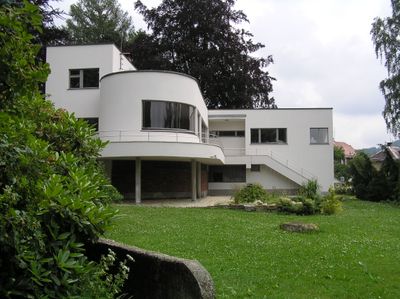
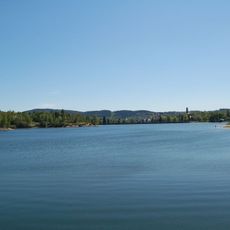
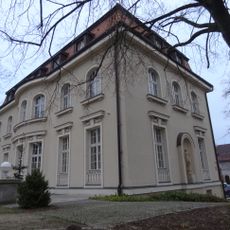
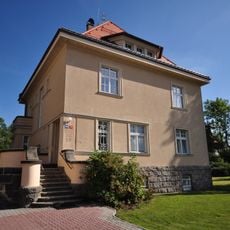
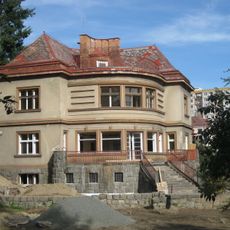
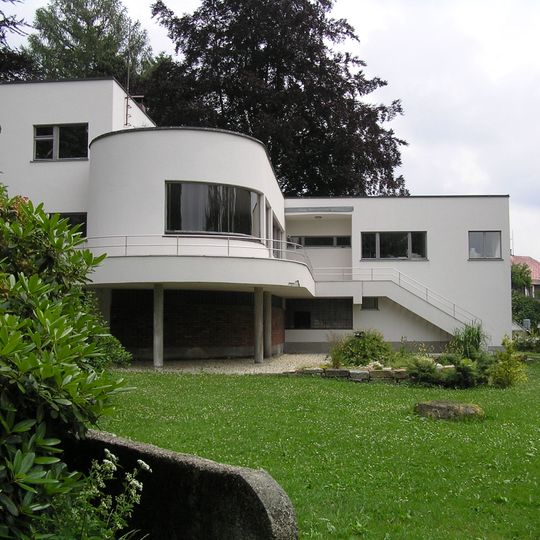
Háskova vila is a three-story house with white walls and large windows positioned on a slope above Mšeno Reservoir. The L-shaped structure houses living spaces, bedrooms, offices, and a basement garage, with a rounded living section featuring a balcony.
Jaroslav Hásek saw Heinrich Lauterbach's design for a detached family house at the 1929 WUWA exhibition in Breslau, then commissioned him to design this villa. Max Daut built it in 1930–1931. After the 1948 communist takeover the Hásek villas were nationalised and both brothers emigrated to Canada; after 1989 the houses were returned to the family. Zdeňka Hásková, who died in Canada in 2014 aged 108, visited her former home before her death.
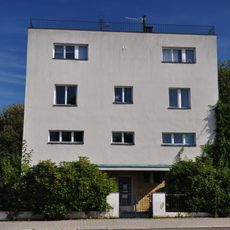
The name recalls the Hásek brothers, who exported glass bangles to India and built two villas on the slopes above Mšeno Reservoir; the street U Háskových vil is named after them. Zdeňka Hásková, who died in Canada in 2014 aged 108, visited her former home before her death.
The villa is a private family home, not open to visitors, so the grounds and interior cannot be toured. It stands on Průběžná street in Jablonecké Paseky, on the slope east of a bay of the Mšeno reservoir; the nearby street U Háskových vil recalls the two Hásek villas. The rounded living-room end and the glazed stair tower can be seen from the public street.
The building showcases aerodynamic functionalism, a design approach emphasizing lightness and flowing curves to create harmony with the natural landscape. This subtle integration into the surroundings makes it a rare example of this design movement in the region.
The community of curious travelers
AroundUs brings together thousands of curated places, local tips, and hidden gems, enriched daily by 92,634 contributors worldwide.