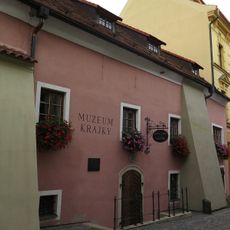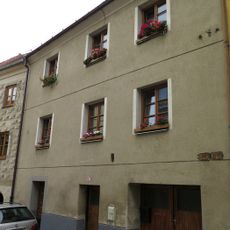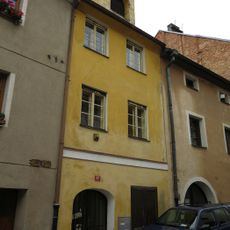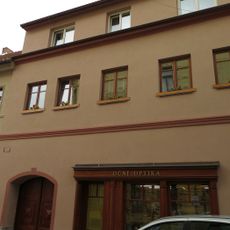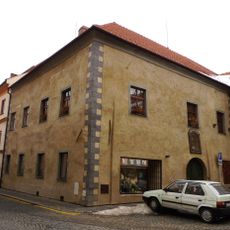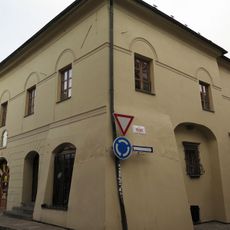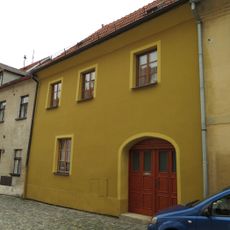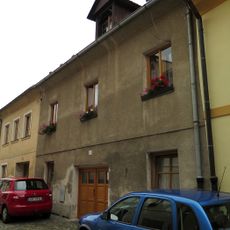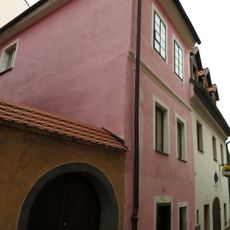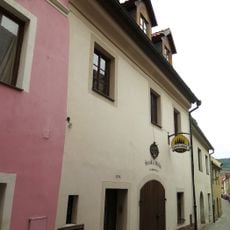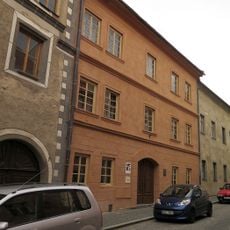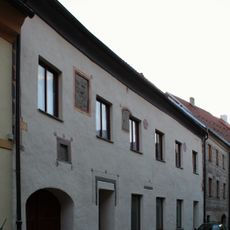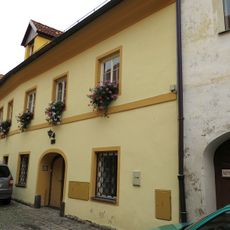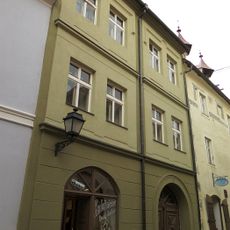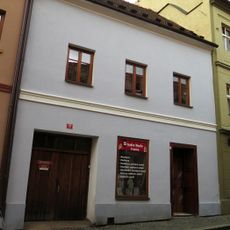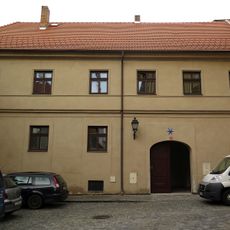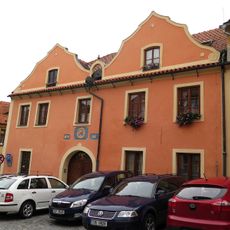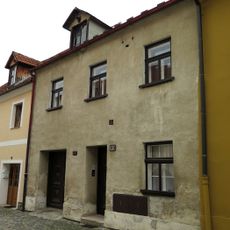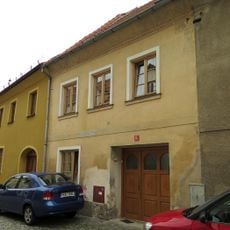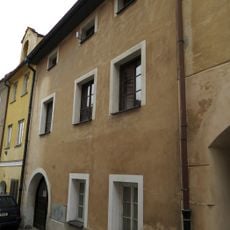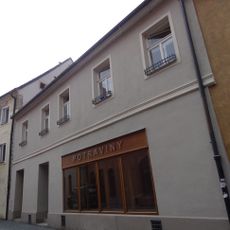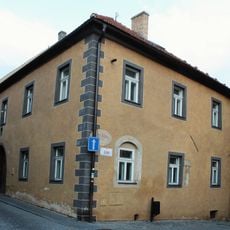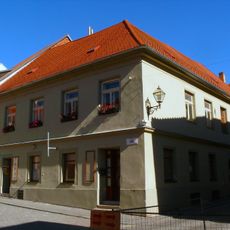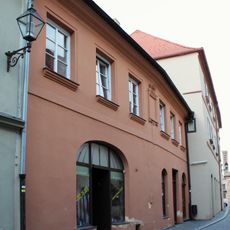
Dlouhá 95, Cultural monument in Prachatice I, Czech Republic.
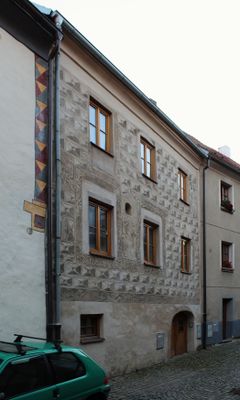
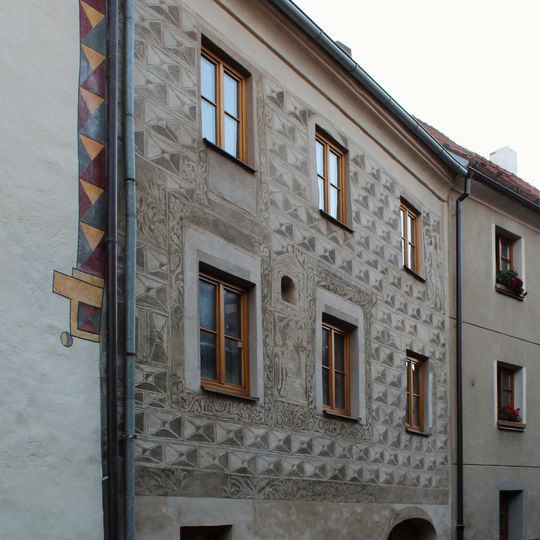
Dlouhá 95 is a two-storey town house on the south side of Dlouhá Street in Prachatice, built in Gothic style and rebuilt in the Renaissance in the 16th century. Its three-axis street facade is covered with sgraffito rustication in the form of psaníčka, framed by vine scrolls with grapes and five-petalled flowers, with a bagpiper figure between the first-floor windows. The ground floor and first floor are Gothic masonry, the second floor Renaissance; the south wall toward the parkán is the original 14th-century inner town wall.
The first archival mention of the house dates to 1723, but it likely originated at the town's founding around 1300, initially in wood. It was rebuilt in stone in the late 14th century, extended to the inner wall in the late 15th century, and extensively remodelled in Renaissance style in the 16th century. After a fire in 1832 the roof and ceilings were altered, and the sgraffito was uncovered and restored in 2011.
The sgraffito vine scrolls around the windows carry five-petalled flowers, which may refer to the Rožmberk family, lords of the town, though the five-petalled rose also stands for love. Between the first-floor windows a bagpiper in a feathered hat is painted; bagpipes were read as an erotic symbol as well as a folk instrument. The evening bell at ten, the Soumarský zvon, once drove muleteers out of the taverns.
The house is located in downtown Prachatice and easy to reach on foot. It sits on Dlouhá Street, a main street where you can see other buildings of interest nearby.
The five-petalled flowers framing the windows may refer to the Rožmberk family, who owned Prachatice; the five-petalled rose is also a symbol of love. Between the first-floor windows and below a niche is a figure of a bagpiper in a feathered hat, a motif read as an erotic symbol.
The community of curious travelers
AroundUs brings together thousands of curated places, local tips, and hidden gems, enriched daily by 92,633 contributors worldwide.