Tuláčkův statek, Historical homestead in Kruh, Czech Republic.
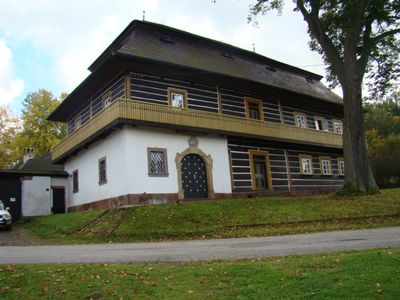
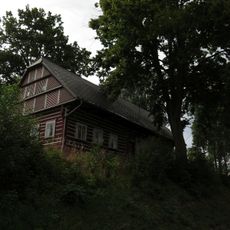
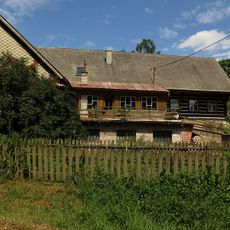
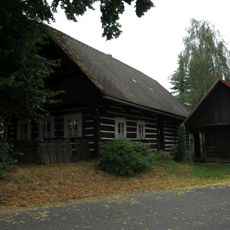
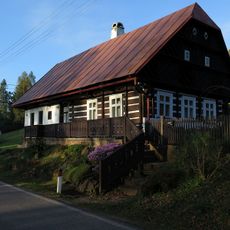
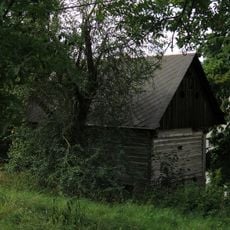
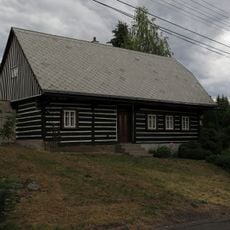
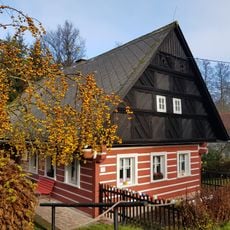
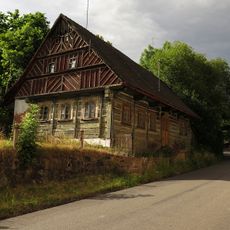
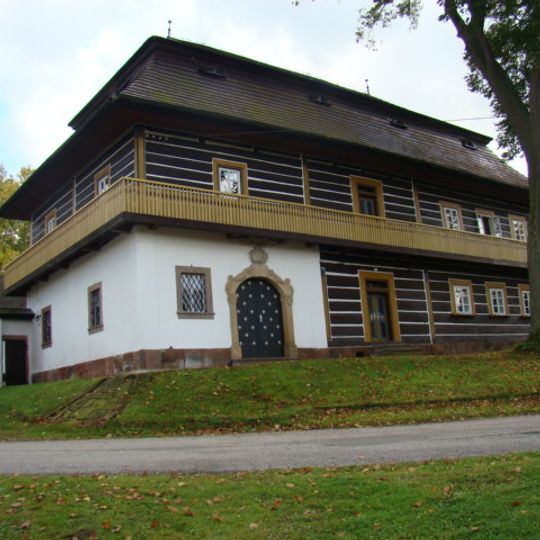
Tuláčkův statek is a homestead featuring traditional timber frame construction, a mansard roof, and high walls enclosing a central courtyard with gates. The complex is organized as a typical rural residential arrangement with a clearly defined perimeter and central inner space.
Built in 1760 by linen merchant Jan Horáček, who later became village reeve and grew flax on the farm. Josef Tuláček owned it from 1886 until 1930, when his nephew Bohumil Kovář took over. Confiscated after World War II, it was used by a collective farm (JZD) and fell into disrepair before the Faculty of Architecture of Czech Technical University in Prague acquired it and began reconstruction; the building passed final inspection in 1982.
The name U Tuláčků comes from Josef Tuláček, who owned the farm from 1886; his nephew Bohumil Kovář took over in 1930. The farm is also called Ve dvoře. Its half-timbered late Baroque form, with a mansard roof and a courtyard enclosed by a high wall with a gate and side entrance, is a documented example of Podkrkonoší rural building.
The homestead is in the village of Kruh in the Semily district, and since January 2021 it has served the Faculty of Architecture of CTU in Prague as a teaching centre for intensive studio work, open-air painting courses and off-site meetings. Because it is in active academic use, access to the courtyard and interiors is not guaranteed for casual visitors; arrange a visit in advance with the faculty.
The homestead's name comes from Josef Tuláček, who owned it from 1886 until 1930, when his nephew Bohumil Kovář took over. The state confiscated the farm after World War II and a collective farm (JZD) later used it, during which it fell into disrepair. The Faculty of Architecture of Czech Technical University in Prague then acquired it and began reconstruction, with the building officially approved for use in 1982.
The community of curious travelers
AroundUs brings together thousands of curated places, local tips, and hidden gems, enriched daily by 92,689 contributors worldwide.