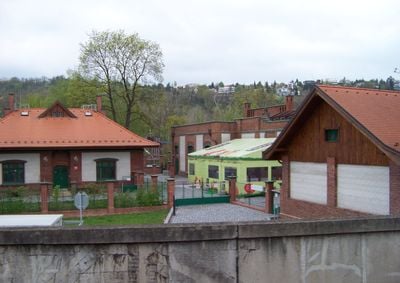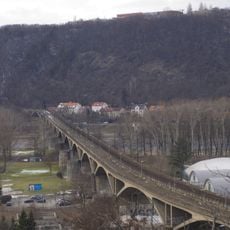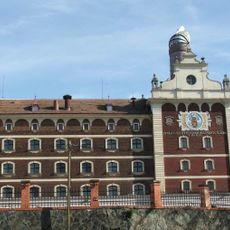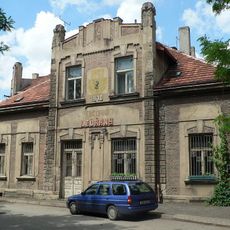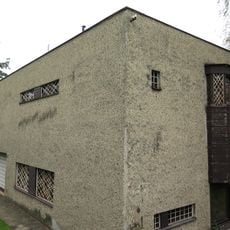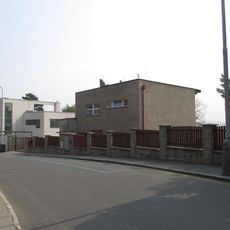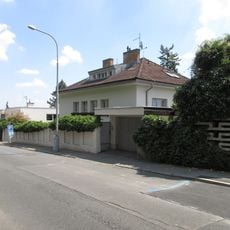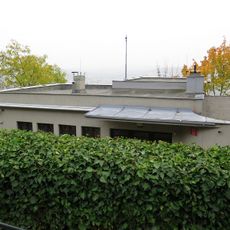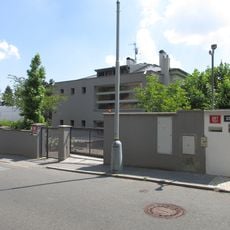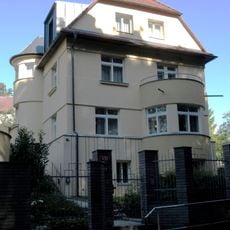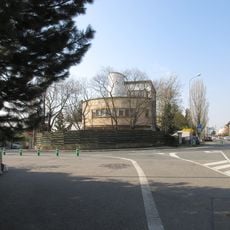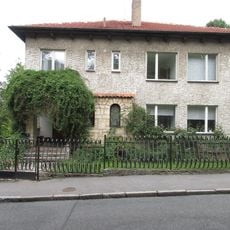
Vršovice water works in Braník, Water treatment facility in Braník, Czech Republic.
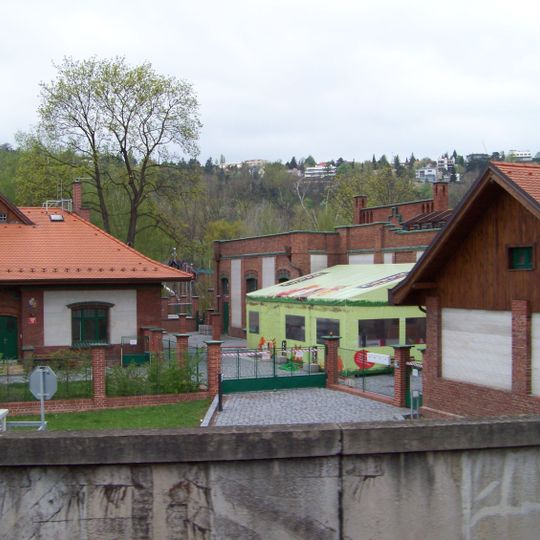
The Vršovice water works pumping station in Braník is a red-brick building designed by Jan Kotěra in geometric Art Nouveau style and built in 1906–1907. Its facade combines red brick with green-glazed tiles, and the structure is topped by stepped gables with a characteristic staggered-arch motif. High windows with segmental arches have glass set in geometrically divided metal frames.
The water source was identified in 1905, and the pumping station was built in 1906–1907 to a design by Jan Kotěra in geometric Art Nouveau style, with the whole water system supplied by Karel Kress's firm. In 1921–1922 the site was extended with new buildings, including a second engine house, and the drive changed from gas to steam. Operation ended in 1975, and a full reconstruction followed in 2009–2011.
The site is named after Vršovice, the district it supplied with drinking water. Since the 2009–2011 reconstruction it has served as a cultural and social centre, while the former coal house became a sauna and wine bar and the dwelling a clubroom in the 1970s.
The former pumping station stands between Vltavanů and Modřanská streets in Braník. After the 2009–2011 renovation it became a cultural and social centre, so the restored red-brick machine hall and boiler house can be visited; the tennis courts and former coal store date from the 1970s. The site is no longer an operating waterworks.
The site's drinking water was pumped about six kilometres to a reservoir at Zelená Liška in Michle, also designed by Jan Kotěra. The pumping station was built in 1906–1907 by Karel Kress's firm, which supplied the whole water system. Operation ended in 1975; after a 2009–2011 reconstruction costing 150 million crowns, the former engine house became a cultural and social centre.
The community of curious travelers
AroundUs brings together thousands of curated places, local tips, and hidden gems, enriched daily by 94,070 contributors worldwide.