Plátenický dům, Baroque cultural monument in Horní Branná, Czech Republic
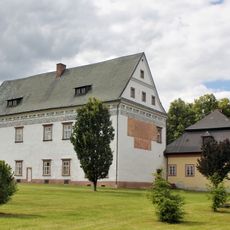
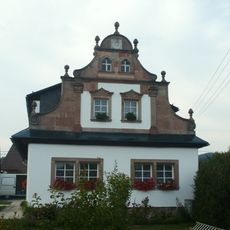
The Plátenický dům is a Baroque single-storey three-wing building with mansard annexes. Its central tract has a five-arch arcade with three doors bearing the dates 1587, 1777, 1850 and 1907. The facades of both wings are decorated with sculptures of vases and angels, and the left wing's gable is topped by a statue of the Virgin Mary. Inside are frescoes and cartouches, including one of Saint Apollonia, patroness of linen weavers.
The house was built in 1587 by the Střížek weaving family in Renaissance style. Its most notable owner, linen merchant František Antonín Střížek (about 1744–1791), had it rebuilt in Baroque style in 1774 and opened his own shop there, adding an adjoining workshop that made it the first Czech linen factory. It was altered again in the 19th century and listed as a cultural monument in 1958.
The house takes its name from plátno, linen cloth, and from the Střížek weaving family who built it in 1587. Inside, frescoes and cartouches depict Saint Apollonia, patron saint of linen weavers. Since summer 2010 a permanent exhibition on the linen trade and a gallery in the cellars have been open here.
The house stands in Horní Branná, where the permanent exhibition on linen weaving and the gallery in the cellars opened in summer 2010. Visitors enter through the arcade of five arches in the central tract, whose three doors bear the dates 1587, 1777, 1850 and 1907. Look up at the gable of the left wing for the statue of the Virgin Mary.
The house is also called Střížkův dům after the weaving family that built it in 1587. Its most notable owner, František Antonín Střížek, traded linen and had the house rebuilt in Baroque style in 1774, adding a workshop that made it the first Czech factory for linen cloth.
The community of curious travelers
AroundUs brings together thousands of curated places, local tips, and hidden gems, enriched daily by 92,697 contributors worldwide.