Rácov Castle, Castle ruin in Čejetičky, Czech Republic.
Rácov Castle is a castle ruin perched on elevated terrain near Čejetičky, with partially preserved stone walls and foundations that reveal typical medieval construction methods. The remains show a layout characteristic of fortifications from that period, with visible traces of residential areas, defensive features, and access routes that still can be read in the ground.
Rácov Castle is known only from indirect mentions in 1380, when Václav of Rácov, an archdeacon of Mladá Boleslav, and shortly afterwards Jakub of Rácov, a priest, took their surnames from it. By 1576 and 1580 it was recorded as deserted and part of the Mladá Boleslav estate. Its masonry was dismantled and used in 1738 to build the neighbouring Neuberk chateau. The castle existed from the 13th to the 15th century.
The castle's name appears in the epithets of Václav of Rácov, archdeacon of Boleslav, and shortly afterwards Jakub of Rácov, a priest, in 1380. The site is also called Ráčov, Drácov or Dráčov. Its masonry was dismantled and used in 1738 to build the neighbouring Neuberk château.
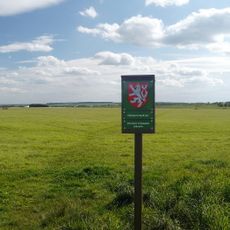
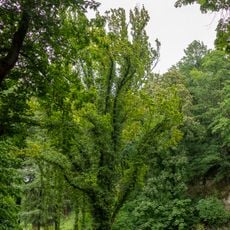
The remains lie on a low spur above the left bank of the Jizera, above Neuberk chateau in Čejetičky. No marked hiking trail leads there, so approach on your own; the outer moat still drops about four metres. The site is freely accessible but overgrown, so watch your footing.
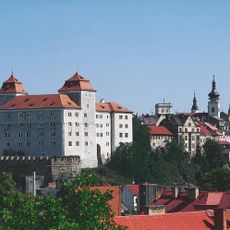
The castle's masonry was dismantled and reused in 1738 to build the neighbouring Neuberk chateau below the hill, so part of the ruin now stands as a later building. The site is a small earthwork complex on a low spur above the left bank of the Jizera, classed as a transition between a fortified manor and a castle.
The community of curious travelers
AroundUs brings together thousands of curated places, local tips, and hidden gems, enriched daily by 92,634 contributors worldwide.