Žíkovec, Hillfort in Voltýřov, Czech Republic.
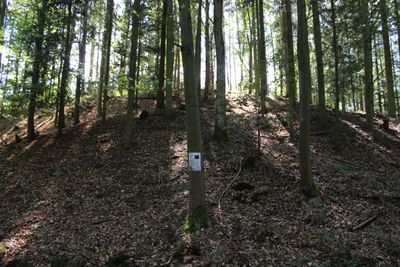
Žíkovec is a hillfort near Voltýřov featuring remains of ancient fortification structures built on elevated terrain. The site shows traces of defensive earthworks and walls that early inhabitants constructed to protect their settlement.
The promontory above the Vltava was first fortified in the late Bronze Age, during the 10th century BC, as a local centre of the Štítary culture. Graphite-tempered pottery shows later occupation in the Hallstatt or early La Tène period, and in the early Middle Ages the acropolis was used again, perhaps as a refuge, hunting camp or watch post linked to the nearby hillfort at Kozárovice. Bedřich Dubský first investigated the site in the 1940s; Lubomír Smejtek led further research in the 1980s.
The name Žíkovec is used for the whole promontory, whose acropolis held a settlement in the early Middle Ages, possibly an occasional refuge, hunting camp or watch post. It probably related in some way to the nearby hillfort at Kozárovice. Fragments of pottery with graphite temper show the site was also occupied in the Hallstatt or early La Tène period.
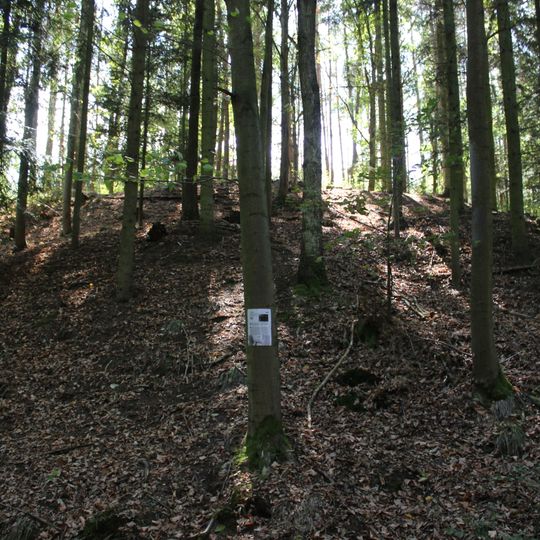
The site lies on a promontory above the right bank of the Vltava, now the Orlík reservoir, southwest of Voltýřov. The slopes that once made the position steep, and on the west side sheer, are submerged. The surviving rampart is an 80 m long earthwork rising up to 2 m above the acropolis but over 8 m above the outer side.
The rampart on the northeast neck still stands 80 m long and rises over 8 m above the outer ground, though only about 2 m above the acropolis. Excavation found two building phases: an older stone-faced wall with a timber-and-earth core that burned down, and a younger wall 240–270 cm wide with stone faces and a rubble fill.
The community of curious travelers
AroundUs brings together thousands of curated places, local tips, and hidden gems, enriched daily by 94,425 contributors worldwide.