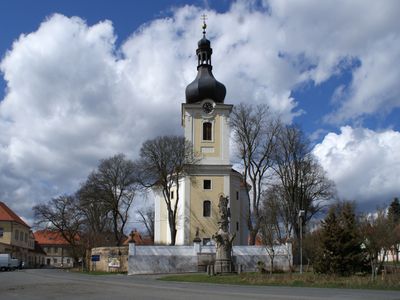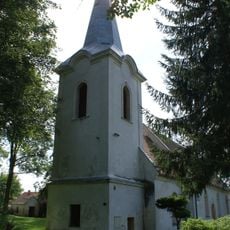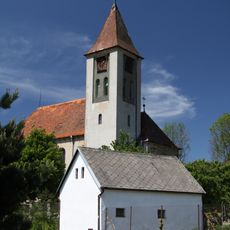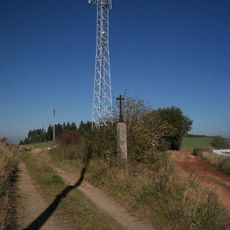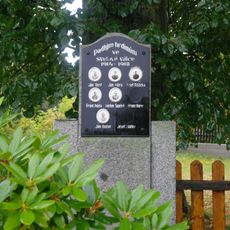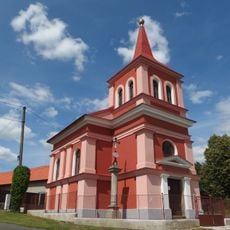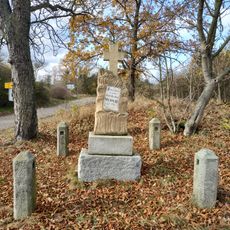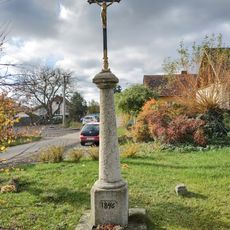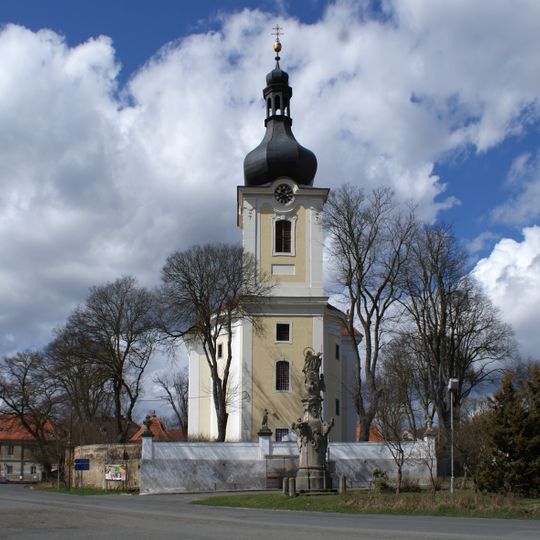
Church of Saint Wenceslaus in Žinkovy, Medieval church building in Žinkovy, Czech Republic.
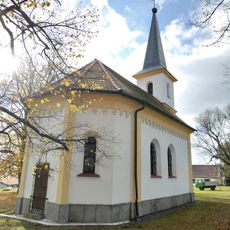
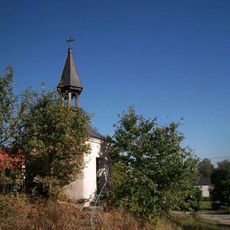
The Church of Saint Wenceslaus in Žinkovy is a single-nave Baroque church built in 1735 after a fire destroyed its predecessor, financed by Countess Marie Terezie of Vrtby and probably designed by František Ignác Prée. Its main axis runs southeast to northwest, with an 18-metre-high square central space, rectangular side chapels and a rectangular presbytery; a 12-metre tower with a cupola rises above the presbytery. Above the stone portal on the northwest side, a relief shows the murder of Saint Wenceslaus.
A parish church is documented in Žinkovy from 1352, and archaeological finds point to an even older building on the site. The Gothic church survived the Hussite wars, but a fire on 15 July 1684 destroyed its roof truss and bells. After a further fire in 1734 burned it completely, Countess Marie Terezie z Vrtby, born von Steinau, financed a Baroque replacement within a year, probably built by František Ignác Prée with sculptor Lazar Widmann contributing.
The church is dedicated to Saint Wenceslaus, whose murder is carved in relief above the northwest stone portal. The main altar holds František Horčička's painting of the saint, installed on 26 September 1820, with a Holy Trinity painting by František Scherer of Klatovy above it from 1833. A glass coffin on the Saint John of Nepomuk altar keeps the relics of Saint Theodore, given to Countess Maria Theresia of Vrtby in 1708 by Pope Clement XI.
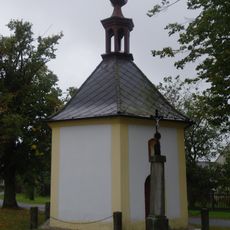
The church stands in the centre of Žinkovy, its main axis running southeast to northwest, with the entrance portal and the gate in the surrounding wall on the western side. The walled churchyard, with its corner chapels and Lazar Widmann's 1768 statues, is best viewed on foot from the gate. The tower above the presbytery rises 12 metres, the central square space 18 metres.
On the altar of Saint John of Nepomuk stands a glass coffin holding the relics of Saint Theodore, taken from the Roman catacombs. Countess Maria Theresia of Vrtby received them as a gift from Pope Clement XI in 1708. The sculptor Lazar Widmann, who worked on the church, also carved the statues at the entrance gate in 1768.
The community of curious travelers
AroundUs brings together thousands of curated places, local tips, and hidden gems, enriched daily by 92,668 contributors worldwide.