Zámka, Bronze Age hillfort north of Prague, Czech Republic
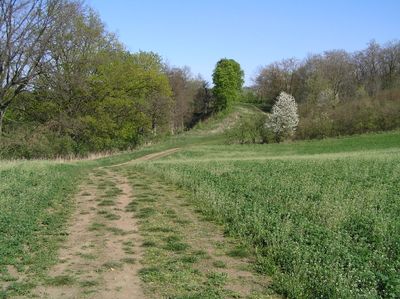
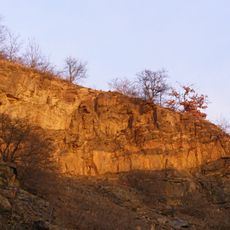
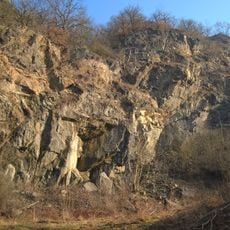
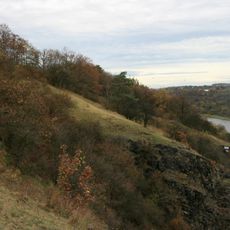
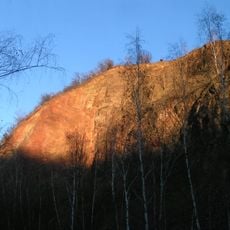
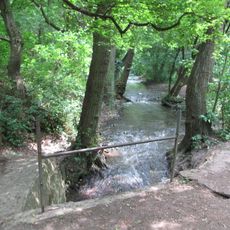
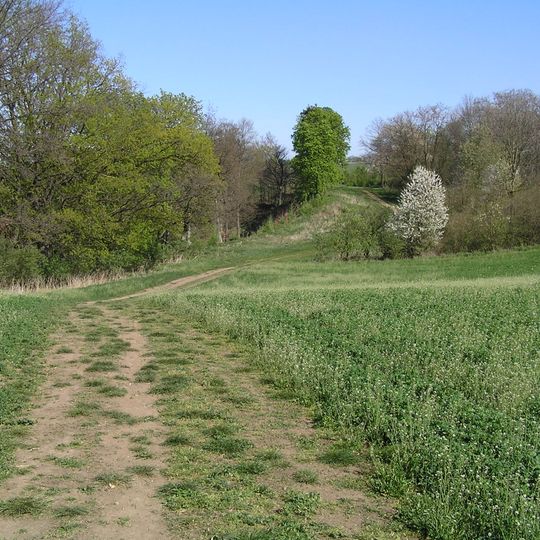
Zámka is a hilltop settlement and hillfort on a triangular promontory above the right bank of the Vltava in Prague-Bohnice. Its northern side drops into the Drahanské Valley, while the western rocky scarp was altered by a quarry. A two-metre rampart survives on the eastern side, and a shallow groove cut into the bedrock on the west probably anchored a palisade.
The promontory was settled in the middle Eneolithic by the Řivnáč culture, then in the Bronze Age (Knovíz pottery) and the Hallstatt period. The surviving ramparts date from the early Middle Ages: walls built around 800–900 AD burned down at the end of the 9th century and the hillfort was probably not renewed. Václav Krolmus dug here in 1849–1854, later Josef Ladislav Píč and Rudolf Turek.
The name Zámka is used for the promontory and its fortifications; the adjacent nature reserve Zámky protects the western and southern slopes. Ceramics of the Řivnáč, Knovíz and Hallstatt cultures found here document successive prehistoric occupations. The site was excavated by Václav Krolmus in 1849–1854, later by Josef Ladislav Píč and Rudolf Turek.
The promontory is only easily accessible from the east, where the entrance to the hillfort most likely stood; the southern slopes are steeper and the western side is a rocky drop above the Vltava. A quarry has damaged part of the site, and the ramparts survive as a low terrain wave in the north and a two-metre-high bank in the east.
A 14-metre groove cut into the bedrock on the western side, 15–20 cm deep and up to 40 cm wide, is the faint trace of a palisade. Its date is uncertain, and part of it was destroyed by quarrying.
The community of curious travelers
AroundUs brings together thousands of curated places, local tips, and hidden gems, enriched daily by 92,777 contributors worldwide.