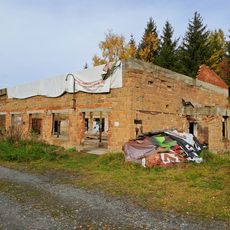
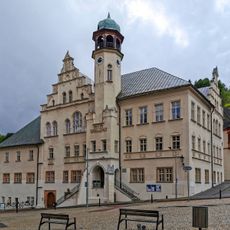
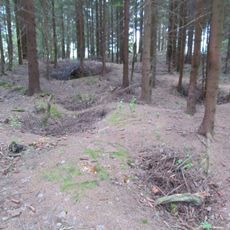
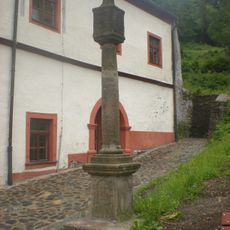
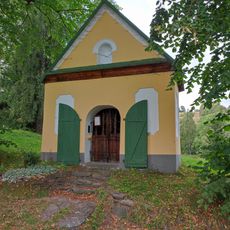
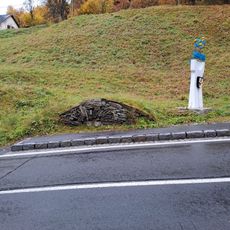
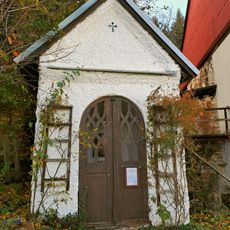
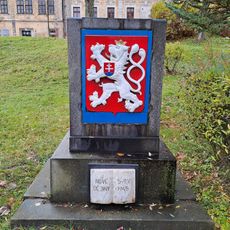
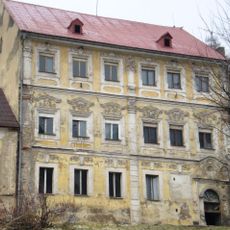
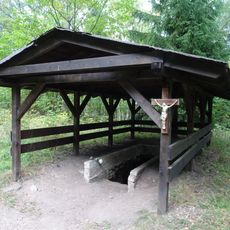
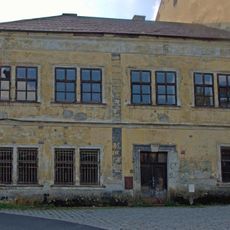
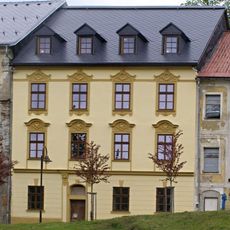
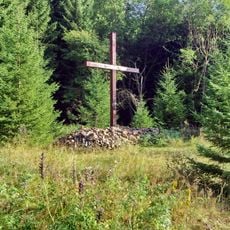
Labour camp Rovnost, Communist labor camp in Jáchymov, Czech Republic.
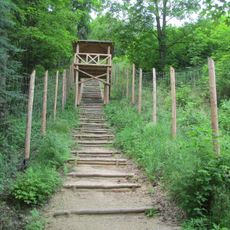
Labour camp Rovnost was a facility for detention and uranium extraction with guard towers and security fences surrounding the grounds. The complex contained residential areas, mining operations, and administrative buildings all within a controlled compound.
The first provisional barracks for prisoners of war were built by the Werner mine during the Nazi occupation. In 1946 captured German soldiers were housed there, and for three and a half years the camp belonged to the Soviet GUPVI system. On 15 September 1949 it was closed as a POW camp and the first Czechoslovak convicted prisoners arrived; from 1949 to 1961 Rovnost was one of the largest and harshest of 18 penal camps.
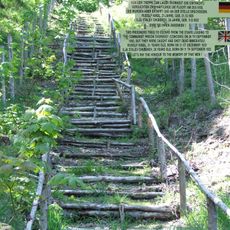
Prisoners called the fenced corridor linking camp to shaft "Ulička ztracených nadějí" (Alley of Lost Hopes) or "Ulička komunismu". Witnesses of Jehovah who refused to mine uranium were made to stand for days in frost by the command barrack. A memorial path, the Jáchymovské peklo trail, now passes the site.
The former camp site lies west above Jáchymov at Důlní vrchy, by the Rovnost I shaft; the Jáchymovské peklo educational trail runs past the area. The terrain is uneven and can be slippery, so sturdy footwear helps.
Records show that prisoners worked under extreme conditions with temperatures in the mines dropping below freezing. The extracted materials directly supplied Soviet atomic weapons programs with fuel.
The community of curious travelers
AroundUs brings together thousands of curated places, local tips, and hidden gems, enriched daily by 94,016 contributors worldwide.