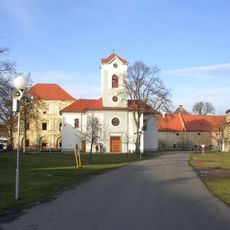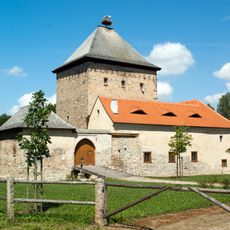
Horní tvrz, Fortified house in Kestřany, Czech Republic
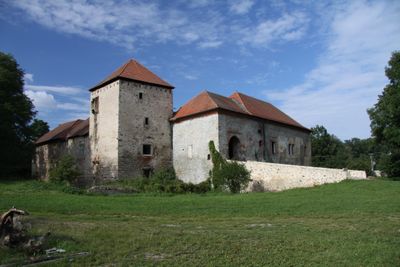
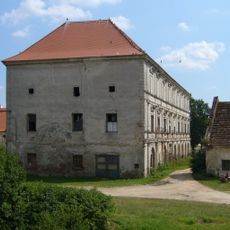
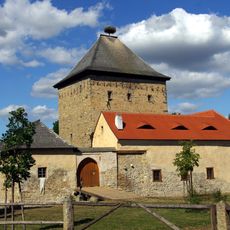
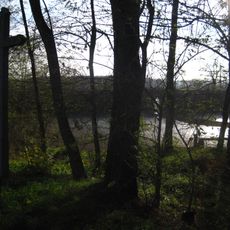
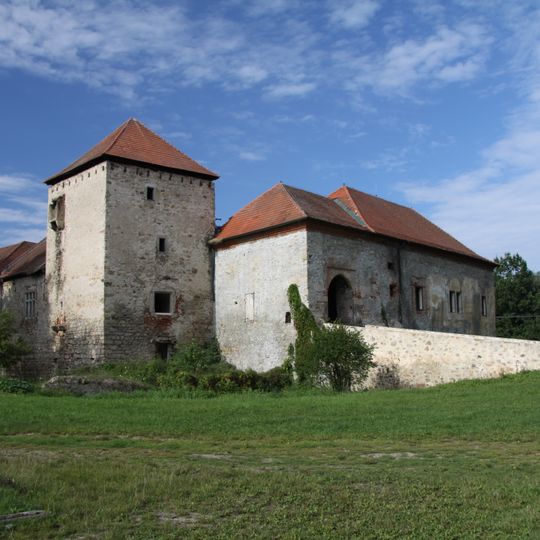
Horní tvrz stands on a spur of a terrain terrace surrounded on three sides by marshy ground. Its oldest building is the rectangular purkrabství, originally free-standing inside the fortified core; at the turn of the 14th and 15th centuries the site was enclosed by a stone wall with three towers, two of them residential and one round and purely defensive. In the late 15th century the Švamberks built a large palace in the moat, entered over a bridge and through a gate with a drawbridge, with a great hall lit by five windows and a chapel under a diamond vault.
Founded probably in the late 13th century, the upper fortress was the seat of the Kestřanský z Kestřan family until 1446, when it passed to the lords of Švamberk. Jindřich ze Švamberka had it repaired in the 16th century, and a late Gothic palace with a chapel was built in the moat. After the Thirty Years' War the neighbouring chateau became the residence and the fortress served economic purposes; flats remained in it until the 1970s.
This fortified residence shaped how rural communities in Bohemia blended everyday living with self-defense during uncertain times. The building stands as a reminder of how families once prioritized safety in their choice of home design.
Horní tvrz stands on a spur of a terrain terrace surrounded on three sides by marshy ground, within the village of Kestřany. It is open year-round during visiting hours. The site forms a heritage ensemble with the neighbouring chateau and the lower fortress, so allow time to walk between them.
The Renaissance vaults inside reveal construction techniques that are rarely seen elsewhere in the region today. These details are easy to overlook but show how builders once approached their work with specific regional methods.
The community of curious travelers
AroundUs brings together thousands of curated places, local tips, and hidden gems, enriched daily by 94,371 contributors worldwide.