Keystone Canyon, Natural canyon in Valdez-Cordova Census Area, United States
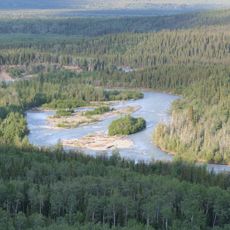
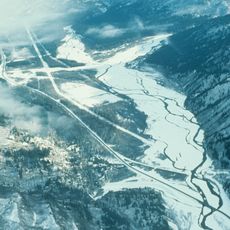
Keystone Canyon is a gorge near Valdez in Alaska, 3 miles (4.8 km) long, connecting the upper and lower valleys of the Lowe River. Its walls are almost perpendicular and cut into slate, with the east wall more abrupt than the west. The bed ranges from 100 to 500 feet wide, narrowing for a quarter mile mid-canyon between abrupt walls 50 to 75 feet high.
Captain William R. Abercrombie named the canyon in 1898 during his exploration of the region. The name references Pennsylvania and reflects the early role this passage played in regional transportation.
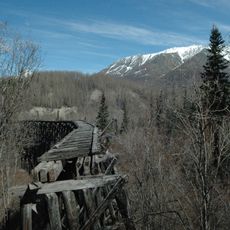
The canyon's name comes from Pennsylvania, the "Keystone State", chosen by explorer William R. Abercrombie. Near Bridal Veil Falls, a turnout marks the trailhead of the Valdez Goat Trail, a section of the Trans Alaska Military Packtrain Trail founded during the Klondike Gold Rush. A short hand-cut railroad tunnel, the last trace of nine companies' attempts to reach Interior Alaska, still stands in the canyon.
The location is accessible from the Richardson Highway, where several viewing areas are positioned along the roadside. Visit during clear weather when the waterfalls are most visible and the canyon walls can be fully seen.
The canyon holds a short section of hand-cut tunnel, the only remaining trace of nine railroad companies that tried to reach Interior Alaska's minerals. A feud and a gunfight ended the effort, and the silent film The Iron Trail is about that era.
The community of curious travelers
AroundUs brings together thousands of curated places, local tips, and hidden gems, enriched daily by 92,586 contributors worldwide.