Salmon Falls Mill Historic District, Historic mill district in Rollinsford, United States.
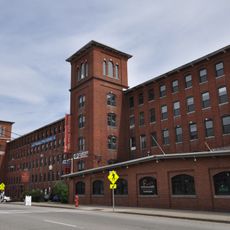
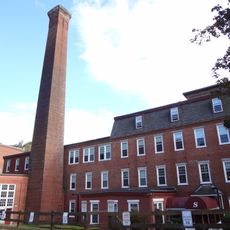
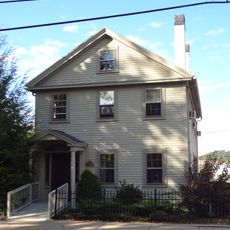
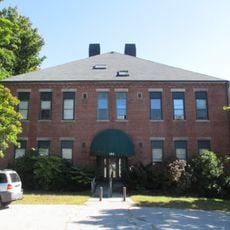
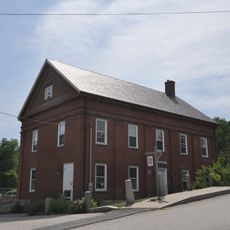
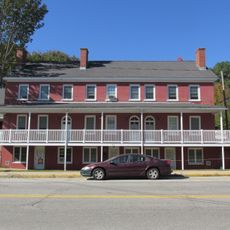
Salmon Falls Mill Historic District covers about 14 acres on Front Street in Rollinsford, New Hampshire, with eleven buildings and structures between Front Street and the Salmon Falls River. Most are brick in an industrial Italianate style, built between about 1840 and the mid-1860s with matching design elements. The district includes a concrete dam from around 1910 and a railroad bridge just downstream.
Industrial use of the site dates to 1623-24, when the Salmon Falls River was first dammed and a sawmill built. In 1822 a Portsmouth merchant bought the water privilege and set up a woolen mill, which burned in 1834 and was replaced by a cotton mill. A partnership including Boston industrialist Amos Lawrence took over, formed the Salmon Falls Manufacturing Company, and built the present Number 2 Mill in 1848. A fire destroyed the original Number 1 mill in 1864, and the company stopped production in 1927.
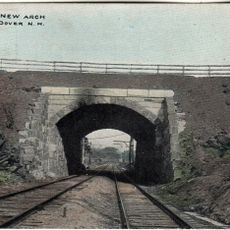
The complex is named for the Salmon Falls River, whose falls and dam powered the mills. The concrete dam spanning the river, built around 1910 to replace a wooden one, and the railroad bridge just downstream are both part of the district. Most buildings stand between Front Street and the river, with a cotton warehouse across Front Street.
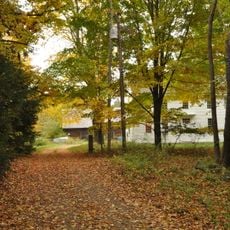
The site is easy to walk through with paths connecting the various preserved buildings throughout the grounds. Plan time to explore the riverfront areas, and be aware that some paths may vary in accessibility depending on the season.
Number 2 Mill, built in 1848, employed an early turbine system instead of the traditional water wheels used elsewhere. This innovation made the mill run faster and more efficiently than most other facilities of its time.
The community of curious travelers
AroundUs brings together thousands of curated places, local tips, and hidden gems, enriched daily by 93,636 contributors worldwide.