Nanjemoy Formation, Geological formation in Charles County, Maryland, United States
The Nanjemoy Formation is a geological layer that spreads across Virginia, Maryland, and the District of Columbia with multiple rock types throughout. Sandstone, claystone, marl, and limestone deposits sit layered together in this structure.
The formation was identified in 1901 by Clark and Martin, who divided it into two distinct sections called the lower Potapaco Member and the upper Woodstock Member. This division helps geologists trace different time periods in the rock layers.
The name comes from Algonquian-speaking Nanticoke and Powhatan groups who lived in the region before European settlement. Their presence remains connected to local place names and the geography of the area.
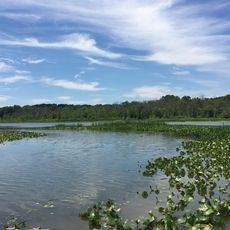
Researchers typically access the formation through creek outcrops on the Maryland peninsula and along the southern side of the Potomac River. These exposed sections allow visitors to see the layers up close without extensive travel.
The Fisher/Sullivan site within the formation holds coprolites from carnivorous fishes dating to the early Eocene period. These fossilized droppings reveal how predators and prey interacted in ancient marine waters millions of years ago.
The community of curious travelers
AroundUs brings together thousands of curated places, local tips, and hidden gems, enriched daily by 60,000 contributors worldwide.