Bracebridge Hall, historic house in North Carolina, United States
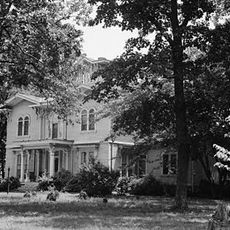
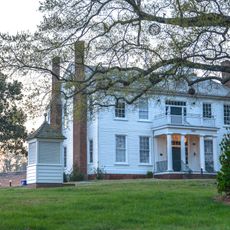
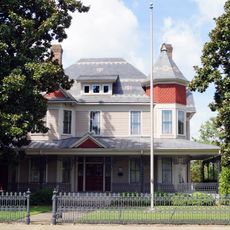
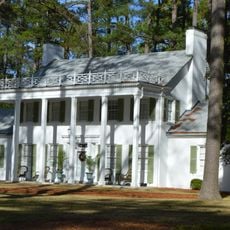
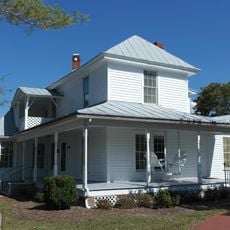
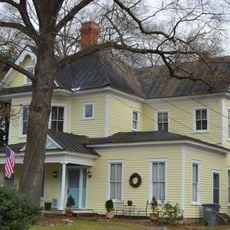
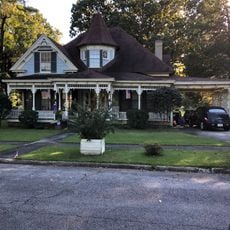
Bracebridge Hall is a large house built in the early 1800s in Edgecombe County near Tarboro. The two-story structure combines Greek Revival and Victorian architectural styles, with high ceilings and broad windows, and sits on land with several outbuildings including a barn and overseer's house.
The original house was built about 1830–1832 and enlarged in stages around 1835–1840, 1880–1881 and 1885. Governor Elias Carr (1839–1900) and his wife Eleanor Kearny Carr are buried in the property's Carr Cemetery, established in 1820. The plantation complex was listed on the National Register of Historic Places in 1971, with a boundary increase in 2005.
The name Bracebridge Hall does not come from a local family; it echoes Washington Irving's 1822 collection of sketches set in an English manor. The plantation office, servants' house called Aunt Pattie's House, and tobacco barn show how the estate was run. Governor Elias Carr and his wife Eleanor Kearny Carr are buried in the 1820 Carr Cemetery on the grounds.
Bracebridge Hall is a private plantation complex near Macclesfield, not a site with public visitor access, so the grounds and buildings should be viewed from the public road. The district covers eight contributing buildings, two sites and three structures, including the 1820 Carr Cemetery where Governor Elias Carr is buried. The terrain is flat agricultural land.
The property also holds a Carr Cemetery dating to 1820, where Governor Elias Carr (1839–1900) and his wife Eleanor Kearny Carr (1840–1912) are buried. The plantation office, servants' house known as Aunt Pattie's House, and overseer's house all date from about 1860 to 1885.
The community of curious travelers
AroundUs brings together thousands of curated places, local tips, and hidden gems, enriched daily by 92,634 contributors worldwide.