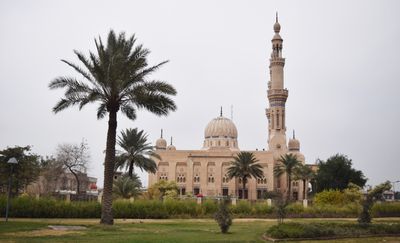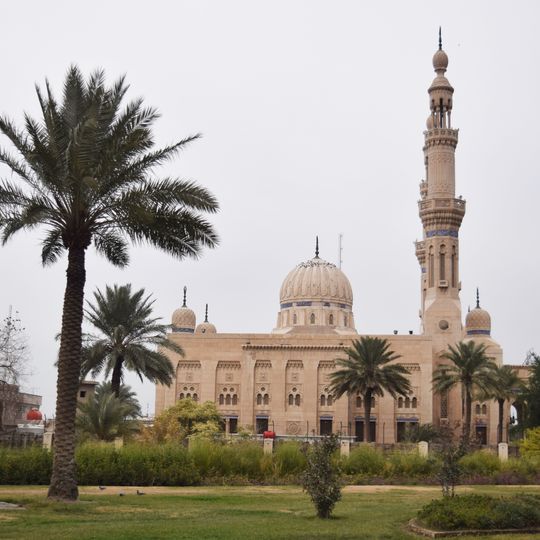
Um al-Tabboul Mosque, Islamic mosque in Baghdad, Iraq.
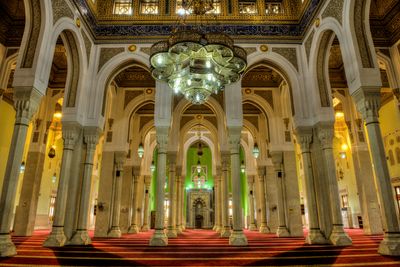
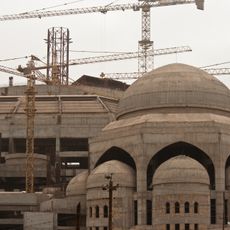
Um al-Tabboul Mosque is a place of worship in Baghdad designed with geometric patterns and calligraphic decorations following traditional Islamic principles. The structure includes separate prayer halls for different groups and displays architectural craftsmanship throughout its interior and exterior.
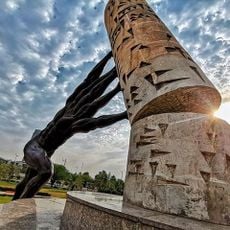
The area was an army shooting range before the mosque was built to commemorate officers executed there on 20 September 1959 after the Shawwaf coup attempt. The foundation stone was laid on 16 July 1964; the mosque opened on 20 September 1968, designed by Abd al-Salam Ahmed on the model of Cairo's Citadel of Saladin. The remains of the Free Officers were moved to a cemetery beside it.
The mosque is named after Umm al-Tabul Square, where it stands; after 2003 Salafists called it Ibn Taymiyyah Mosque, and the Sunni Endowment later restored the original name. Its Friday, Eid and five daily prayers are held here, and the tombs of the Free Officers executed in 1959 lie beside it.
The mosque stands in the Yarmouk area near the Baghdad airport highway, with its main gate facing the Qadisiyah district. The prayer hall sits about 1.5 metres above ground and is reached by a wide white marble staircase. Three houses for staff stand west of the building, and the cemetery of the officers commemorated here lies beside them.
The mosque was included in Iraq's official 1982 tourist guide as a landmark recommended for visitors, then referred to as the "Martyr's Mosque". Its design was modelled on the Citadel of Saladin in Cairo, but built on a larger scale, with plans drawn by the artist Arsham George.
The community of curious travelers
AroundUs brings together thousands of curated places, local tips, and hidden gems, enriched daily by 94,337 contributors worldwide.