Kinabalu Park, Protected mountain park in Sabah, Malaysia
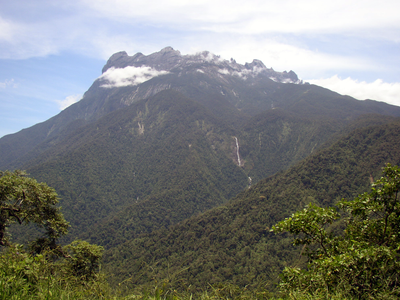
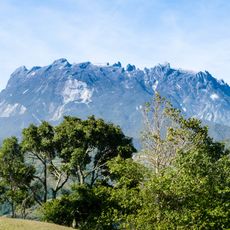
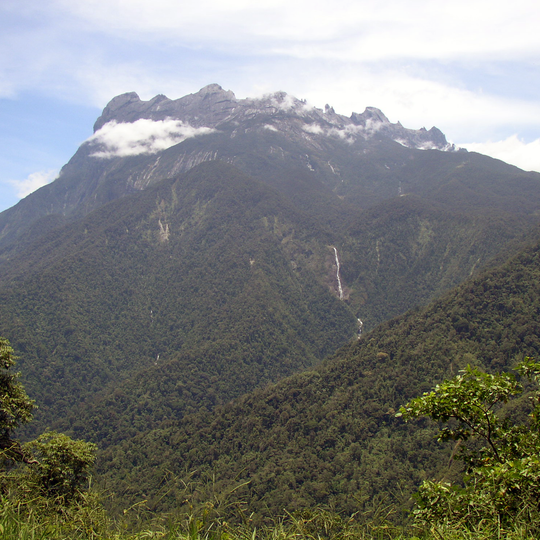
Kinabalu Park is a 754-square-kilometre protected area in Sabah surrounding Mount Kinabalu, which reaches 4,095.2 metres. Its slopes rise from lowland dipterocarp forest through montane oak and rhododendron to coniferous forest, alpine meadow and stunted summit bushes. The upper flanks show grey rock faces and a jagged crest, with thin waterfalls descending the wooded slope.
The park was established in 1964 following scientific expeditions between 1962 and 1964 led by Professor Corner that documented the mountain's rich biological diversity. These research efforts provided the foundation for protecting the area and eventually led to its recognition as a UNESCO World Heritage Site.
The mountain holds deep spiritual meaning for the Dusun people and other indigenous communities who have called this region home for generations. Local guides and residents continue to share their knowledge of the land, and their presence shapes how visitors experience the park today.
The park headquarters sits at 1,563 m, 88 km from Kota Kinabalu on sealed roads; chalets cluster around it, and accommodation plus guide bookings go through Sutera Sanctuary Lodges. Every climber must be accompanied by a qualified guide, and hikers now spend one night at the lodge near the entrance before the required stay at Laban Rata. The summit trail starts at Timpohon, with the Mesilau Trail as an alternative; February to May is drier, while October to January is wettest.
Mount Kinabalu is one of the youngest non-volcanic mountains in the world, formed within the last 10 to 35 million years from intruding granite pushed upward, and it still rises about 5 millimetres a year. The park also holds Low's Gully, a ravine 1.6 kilometres deep that stretches 10 kilometres down the mountain's side.
The community of curious travelers
AroundUs brings together thousands of curated places, local tips, and hidden gems, enriched daily by 92,665 contributors worldwide.