Mare de Déu de Canòlich, Catholic church shrine in Sant Julià de Lòria, Andorra
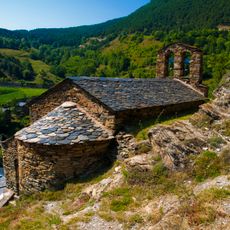
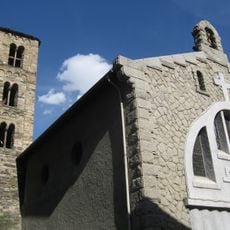
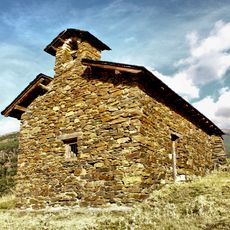
The Mare de Déu de Canòlich is a small chapel set high in the Pyrenees, built with thick stone walls and pitched roofs typical of mountain construction. The building sits among spruce trees and meadows, offering wide views across the valley from its hillside position.
According to tradition, a shepherd from Bixessarri found the Romanesque polychrome carving of the Virgin in 1223, guided by a white dove to a small balma where the sanctuary now stands. No structure of the earlier Romanesque church survives. The present building is of early twentieth-century construction and was restored between 1973 and 1979.
The Virgin of Canòlich is the patroness of Sant Julià de Lòria parish, and her image is kept in the parish church of Sant Julià and Sant Germà. Residents climb to the sanctuary in large numbers on the last Saturday of May for the aplec, a gathering to venerate the image. The name Canòlich has no clear etymology; medieval spellings such as canolig complicate any explanation.
The sanctuary stands at 1,635 m on the eastern slopes of the Serra Plana, reached by road past Bixessarri and up the bends toward the Coll de la Gallina. Tables and barbecues stand around the church, and a restaurant and hotel lie across the road. A small oratory by the Valira at Aixovall marks the old viewpoint toward the shrine.
The Romanesque polychrome carving of the Virgin, kept in the parish church of Sant Julià de Lòria, was found in 1223 by a shepherd from Bixessarri, led by a white dove to a small balma where the shrine now stands. The Vatican crowned the image on 29 May 1999, a year after the 775th anniversary of the finding was marked.
The community of curious travelers
AroundUs brings together thousands of curated places, local tips, and hidden gems, enriched daily by 94,005 contributors worldwide.