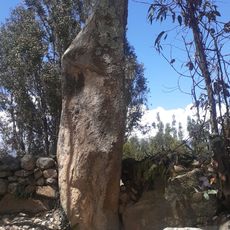
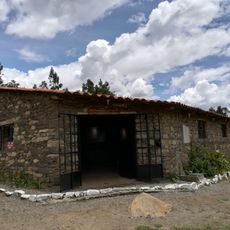
Willkawayin, Pre-Incan archaeological site in Callejón de Huaylas, Peru.
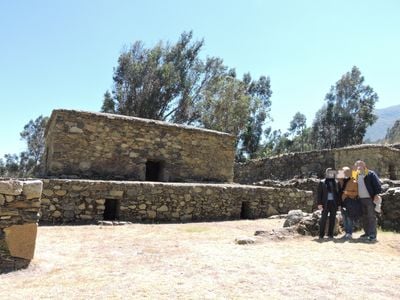
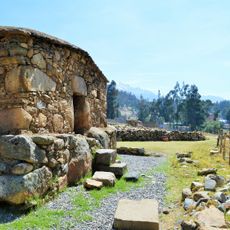
Willkawayin is an archaeological site featuring a three-story stone temple called Huilcahuin that reaches about 9 meters high and contains 19 interior chambers. These rooms are connected by internal staircases and ramps.
Huilcahuaín existed long before the Wari arrived, likely founded in the Early Intermediate Period as a Recuay center and possibly the last Recuay capital before Wari conquest. Around 700 AD, dated by excavations of 2005–2007, the Wari turned it into an administrative hub of their Callejón de Huaylas network. Its power collapsed at the end of the 8th century, when Wari temples were abandoned.
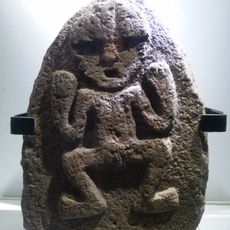
The so-called temple was in fact a mausoleum-chullpa, a platformed tomb holding several mortuary chambers for Recuay and later Wari elite, replacing earlier underground gallery burials. Its Quechua name, Willkawayin, is usually read as "house of the grandchildren", from willka and wayi. Look for the two surviving stone feline images under the roof cornice.
The site lies about 7 kilometers northeast of Huaraz at an elevation of 3,400 meters. The drive from the city takes about 45 minutes on unpaved roads.
The two feline stone images under the roof cornice are what remain of a larger set; one shows a head with its forehead covered by two hands, a crossed-hands motif also found at the Kotosh temples in Huánuco. Excavations funded by Barrick Misquichilca between 2005 and 2007 dated the complex to around 700 AD and yielded textiles, metal objects, offering ceramics and grinding stones.
The community of curious travelers
AroundUs brings together thousands of curated places, local tips, and hidden gems, enriched daily by 92,712 contributors worldwide.