Matenadaran, Manuscript repository and research museum in Yerevan, Armenia
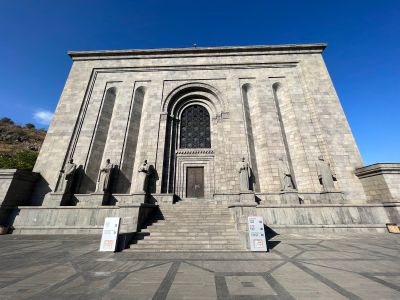
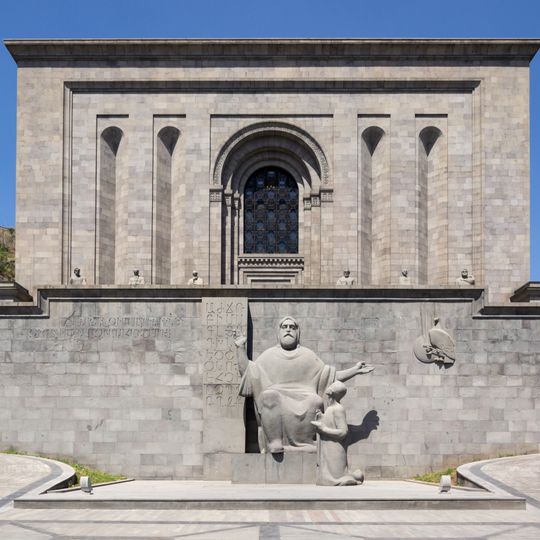
Matenadaran is a research institute and manuscript museum in Yerevan, named after Mesrop Mashtots, creator of the Armenian alphabet. Its light grey stone building, designed by Mark Grigoryan, has a broad facade with six basalt statues of medieval scholars in niches and a seated statue of Mashtots with the kneeling Koryun before it. Inside are medieval Armenian architectural forms.
The institution originated in 1921 from the manuscript library in Etchmiadzin and moved to its current site between 1945 and 1957 following designs by architect Mark Grigoryan. The relocation answered the need to centralize a large collection in a secure location.
The name comes from the Armenian word for library and today marks a central point for scholars from around the world. Visitors see writings from different regions covering medicine, astronomy, philosophy and geography.
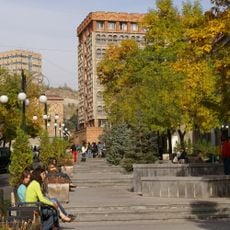
The Matenadaran stands at the northern end of Mesrop Mashtots Avenue, with the sculpted group of Mashtots and Koryun in front of the main facade. The exhibition halls are reached from the entrance lobby, and the building's position on a raised platform means visitors approach it by a broad flight of steps.
The site holds both the largest Armenian book, the 28-kilogram (62-pound) Msho Charyntir, and the smallest Armenian manuscript weighing only 190 grams (6.7 ounces). The size difference shows the range of medieval book production and the demands of different uses.
The community of curious travelers
AroundUs brings together thousands of curated places, local tips, and hidden gems, enriched daily by 92,635 contributors worldwide.