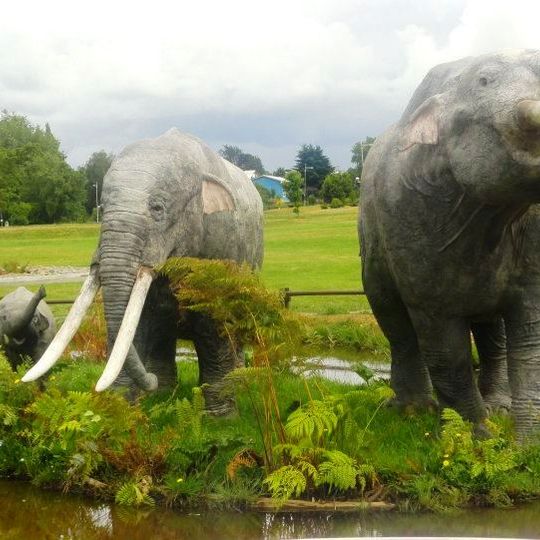
Pilauco Bajo, Archaeological and paleontological site in Osorno, Chile
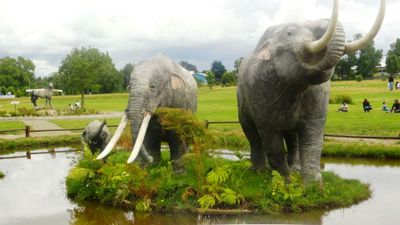
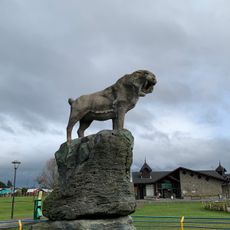
Pilauco Bajo is an excavation site in Osorno containing remains from the late ice age period. The location holds hundreds of bones, teeth, fossilized droppings, wood pieces, seeds, and skin fragments from extinct animals that once lived here.
In February 1986, workers building the Villa Los Notros housing complex on the banks of the Damas River found a jaw with molars, a vertebra and a rib, first reported by the Diario Austral de Osorno. Over 20 years later a team led by Mario Pino of the Universidad Austral de Chile identified the animal as a gomphothere. Excavations in 2007-2008 recovered hundreds of bones, teeth and coprolites, and calibrated radiocarbon dates place human activity at the site between 16,400 and 12,800 years BP.
The site's name comes from the Pilauco sector, on the banks of the Damas River. Since the first fossils were reported in 1986, it has become a focus of paleontological research and paleotourism, with a museum, a trail and a viewpoint where visitors can watch excavations and see the finds.
A visitor center offers observation points over the excavation area where you can watch scientific work and examine replicas of animal remains. The site is organized to let you follow the ongoing research activities directly.
The site's most cited find is a footprint dated to about 15,600 radiocarbon years, presented as a human track. The stone tools found here are dacite, rhyodacite and rhyolite from the Puyehue-Cordón Caulle volcanic complex east in the Andes, carried to the site by people because nearby rivers did not transport them.
The community of curious travelers
AroundUs brings together thousands of curated places, local tips, and hidden gems, enriched daily by 94,460 contributors worldwide.