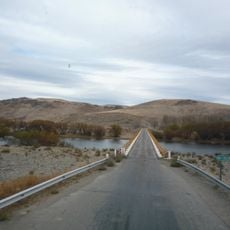
Collón Curá Formation, Geological formation in Neuquén Province, Argentina.
The Collón Curá Formation is a geological deposit spread across southern Neuquén Province that stretches several hundred meters thick. It displays multiple rock layers including tuff, sandstone, siltstone, marl, limestone, and pumice that visitors can observe across the region.
The formation was first described in 1899 by Roth who identified grey tuff rocks in the Collón Curá River valley. Yrigoyen officially named it in 1969, establishing the designation used today for this rock sequence.
Scientists from Argentina and international institutions conduct research at the formation to study fossils, stratigraphy, and geological evolution patterns.
The site is found in a natural setting that visitors encounter while exploring the Patagonian region. Visitors should come prepared with sturdy footwear and protective clothing, as conditions in this area can be harsh.
The formation holds fossils of snakes and extinct terror birds that lived roughly 16 to 11 million years ago. These discoveries reveal the prehistoric animal life that inhabited Patagonia during that time period.
The community of curious travelers
AroundUs brings together thousands of curated places, local tips, and hidden gems, enriched daily by 92,185 contributors worldwide.