Lastarria, Cultural district in Santiago, Chile.
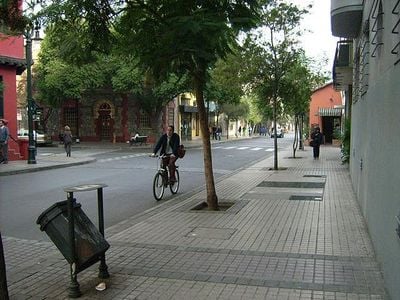
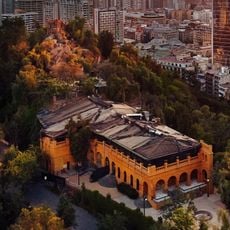
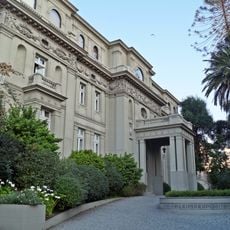
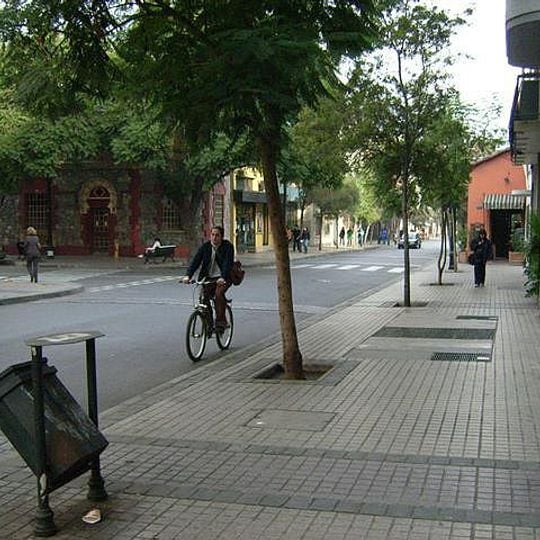
Barrio Lastarria is a neighborhood in Santiago, Chile, stretching between Santa Lucía Hill and Parque Forestal and known for its neoclassical architecture from the early 20th century. The stone-paved lanes run between low-rise buildings with wrought-iron balconies and facades that have kept their original details.
After the Conquest of Chile, Bartolomé Blumenthal held this land and built a mill; he died in 1585 at his property east of Santa Lucía. The neighborhood grew around the Iglesia de la Veracruz, with houses along winding streets, among them the early-19th-century house at Plaza Mulato Gil de Castro. The sector was declared a Zona Típica on 21 February 1996, and its boundaries were extended on 7 July 1998 under the name Barrio Santa Lucía-Mulato Gil de Castro-Parque Forestal.
The neighborhood grew around the Iglesia de la Veracruz, a neoclassical church built in 1857 whose facade was restored in 2001 and 2002. In the late 1960s venues such as El Loro Perjuro, the piano-bar La Guarida and La Casa de la Luna opened here and became the first meeting points for Santiago's homosexual community. On 5 November 2006 the Movilh declared the sector Santiago's first gay-friendly neighborhood in an act held in Parque Forestal.
Both Universidad Católica and Bellas Artes metro stations provide access points from which the whole area can be explored on foot. Most shops and eateries concentrate along José Victorino Lastarria Street, which is busiest during daytime.
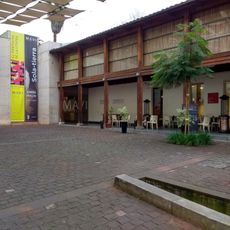
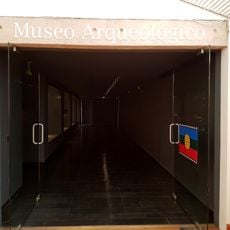
The 1981 Plaza Mulato Gil de Castro was laid out to save a row of facades, starting with the early 19th-century house of Gil de Castro. The name honours José Gil de Castro, the mulatto painter of independence-era portraits. The square now anchors the Museo Arqueológico de Santiago.
The community of curious travelers
AroundUs brings together thousands of curated places, local tips, and hidden gems, enriched daily by 92,637 contributors worldwide.