Cerro Barcino Formation, Geological formation in Chubut Province, Argentina
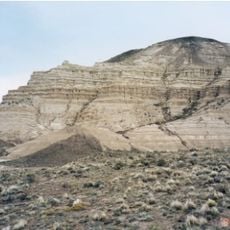
The Cerro Barcino Formation is a geological sequence in Chubut Province, Argentina, made up of fine sandstone and mudstone layers stacked over time in the Patagonian landscape. The exposed rock cuts through open terrain and contains fossil remains from the Cretaceous period, preserved within distinct sedimentary layers.
The formation was laid down during the Cretaceous period within the Cañadón Asfalto Basin, recording changes in the environment over millions of years. The layers reflect a time when South America's climate and landscape were going through major shifts, leaving behind a detailed record in the rock.
The formation is known as a reference point for understanding the deep past of Patagonia, a region where fossil hunting has shaped local identity for generations. Scientists and enthusiasts who visit the area often find that the exposed rock layers tell a story that goes far beyond what any museum display can show.
Reaching the outcrops requires a four-wheel-drive vehicle, as the terrain is rough and the area is far from any town. It is worth checking local conditions and any access requirements before setting out, since the site can be difficult to reach in wet weather.
Two dinosaur species were first identified here: Chubutisaurus insignis, a large plant-eating dinosaur, and Tyrannotitan chubutensis, a giant predator closely related to Giganotosaurus. The fact that both were found in the same formation makes this site one of the more productive spots for large dinosaur finds in all of South America.
The community of curious travelers
AroundUs brings together thousands of curated places, local tips, and hidden gems, enriched daily by 90,777 contributors worldwide.